Files recovered from Osama bin Ladens compound in Abbotabad reveals that the prime ministers brother, Punjab chief minister Shahbaz Sharif, sought to strike a peace deal with al Qaeda, The Long War Journal reported.
The files were revealed in terror convict Abid Naseers trial by a Brooklyn jury earlier this month. One of the files is a letter written by Atiyah Abd al Rahman (Mahmud), who was then the general manager of al Qaeda, to Osama bin Laden (identified as Sheikh Abu Abdallah) in July 2010.
Re: Shahbaz wanted to cut deal with TTP as long they didn't conduct operations in Punjab
Yaheeh tu dukh aur rona ha Pakistan ka.jo jitna bara choor
dako..ghaddar..corrupt hota ha utna hi bara uhda milta ha
usay..zara check karo..Nawaz.Zardari.Showbaz,Mullah Diesel
Altaf..
In the early-morning hours of May 2, 2011, a small team of American military and intelligence professionals landed inside the high white walls of a mysterious compound in Abbottabad, Pakistan. The teams mission, code-named Operation Neptune Spear, had two primary objectives: capture or kill Osama bin Laden and gather as much intelligence as possible about the al Qaeda leader and his network. A bullet to bin Ladens head accomplished the first; the quick work of the Sensitive Site Exploitation team accomplished the second. It was quite a haul: 10 hard drives, nearly 100 thumb drives and a dozen cellphones. There were DVDs, audio and video tapes, data cards, reams of handwritten materials, newspapers and magazines. At a Pentagon briefing days after the raid, a senior military intelligence official described it as the single largest collection of senior terrorist materials ever. The United States had gotten its hands on al Qaedas playbookits recent history, its current operations, its future plans. An interagency team led by the Central Intelligence Agency got the first look at the cache. They performed a hasty scruba triageon a small sliver of the document collection, looking for actionable intelligence. According to Director of National Intelligence James Clapper, the team produced more than 400 separate reports based on information in the documents. But it is what happened next that is truly stunning: nothing. The analysis of the materialsthe document exploitation, in the parlance of intelligence professionalscame to an abrupt stop. According to five senior U.S. intelligence officials, the documents sat largely untouched for monthsperhaps as long as a year. In spring 2012, a year after the raid that killed bin Laden and six months before the 2012 presidential election, the Obama administration launched a concerted campaign to persuade the American people that the long war with al Qaeda was ending. In a speech commemorating the anniversary of the raid, John Brennan , Mr. Obamas top counterterrorism adviser and later his CIA director, predicted the imminent demise of al Qaeda. The next day, on May 1, 2012, Mr. Obama made a bold claim: The goal that I setto defeat al Qaeda and deny it a chance to rebuildis now within our reach. The White House provided 17 handpicked documents to the Combatting Terror Center at the West Point military academy, where a team of analysts reached the conclusion the Obama administration wanted. Bin Laden, they found, had been isolated and relatively powerless, a sad and lonely man sitting atop a crumbling terror network.
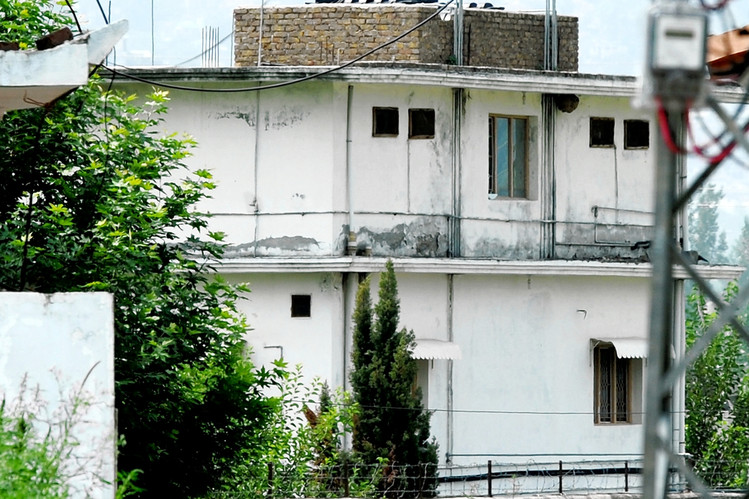
ENLARGE The site, later razed, in Abbottabad, Pakistan, where Osama bin Laden was killed. PHOTO:AFP/GETTY IMAGES
It was a reassuring portrayal. It was also wrong. And those responsible for winning the waras opposed to an electioncouldnt afford to engage in such dangerous self-delusion. The leadership down at Central Command wanted to know what were we learning from these documents, says Lt. Gen. Mike Flynn, the former director of the Defense Intelligence Agency, according to the transcript of an interview with Fox News anchor Bret Baier for a coming Fox News Reporting special. We were still facing a growing al Qaeda threat. And it was not just Pakistan and Afghanistan and Iraq. But we saw it growing in Yemen. We clearly saw it growing still in East Africa. The threat wasnt going away, he adds, and we wanted to know: What can we learn from these documents? After a pitched bureaucratic battle, a small team of analysts from the Defense Intelligence Agency and Centcom was given time-limited, read-only access to the documents. The DIA team began producing analyses reflecting what they were seeing in the documents. At precisely the time Mr. Obama was campaigning on the imminent death of al Qaeda, those with access to the bin Laden documents were seeing, in bin Ladens own words, that the opposite was true. Says Lt. Gen. Flynn: By that time, they probably had grown by aboutId say close to doubling by that time. And we knew that. This wasnt what the Obama White House wanted to hear. So the administration cut off DIA access to the documents and instructed DIA officials to stop producing analyses based on them. Even this limited glimpse into the broader set of documents revealed the problems with the administrations claims about al Qaeda. Bin Laden had clear control of al Qaeda and was intimately involved in day-to-day management. More important, given the dramatic growth of the terror threat in the years since, the documents showed that bin Laden had expansion plans. Lt. Gen. Flynn says bin Laden was giving direction to members of the wider al Qaeda leadership team, if you will, that went all the way to places like West Africa where we see a problem today with Boko Haram and [al Qaeda in the Islamic Maghreb], all the way back into the things that were going on in Afghanistan and Pakistan. Bin Laden advised them on everything from specific operations in Europe to the types of crops his minions should plant in East Africa. To date, the public has seen only two dozen of the 1.5 million documents captured in Abbottabad. Its a thimble-full, says Derek Harvey, a senior intelligence official who helped lead the DIA analysis of the bin Laden collection. And while it is impossible to paint a complete picture of al Qaeda based on the small set of documents available to the public, documents we are able to read, including those released last week in a Brooklyn terror trial, reveal stunning new details. According to one letter, dated July 2010, the brother of Nawaz Sharif, Pakistans current prime minister, sought to strike a peace deal with the jihadists. Bin Laden was informed that Shahbaz Sharif, who was then the chief minister of Punjab, wanted to cut a deal with the Pakistani Taliban, whose leadership was close to bin Laden. The government was ready to reestablish normal relations as long as [the Pakistani Taliban] do not conduct operations in Punjab, according to the letter from Atiyah Abd al Rahman, one of bin Ladens top deputies. Attacks elsewhere in Pakistan were apparently acceptable under the terms of the alleged proposal. Al Qaeda intended to guide the Pakistani Taliban throughout the negotiations. The same letter reveals how al Qaeda and its allies used the threat of terrorist attacks as a negotiating tactic in its talks with the Pakistani military. The letter also shows that Pakistani intelligence was willing to negotiate with al Qaeda. Al Qaeda leaked word to the press that big, earth shaking operations were planned in Pakistan, the letter says, but bin Ladens men and their allies would back off if the Pakistani army eased up on its offensive against the jihadists in the north: In the aftermath of the al Qaeda leak, the intelligence people . . . started reaching out to us through some of the Pakistani jihadist groups, the ones they approve of. One of the Pakistani intelligence services emissaries was Fazl-ur-Rahman Khalil, a longtime bin Laden ally who leads the Harakat-ul-Mujahideen. Khalil was an early booster of bin Ladens war against the West, having signed the al Qaeda masters infamous 1998 fatwa declaring jihad against the Jews and the Crusaders. Another government intermediary was Hamid Gul, the one-time head of Pakistans Inter-Services Intelligence agency. Al Qaedas network in Iran is also described in bin Ladens letters. The Iranian regime held some senior al Qaeda leaders, eventually releasing them. This led to disagreements between the two sides. But the mullahs have also allowed al Qaeda to use Iranian soil as a key transit hub, shuttling fighters and cash to and from South Asia. One letter recounts a plan, devised by Yunis al Mauritani, one of bin Ladens senior lieutenants, to relocate to Iran. Once there, Mauritani would dispatch terrorists to take part in operations around the world. Mauritani was tasked by bin Laden with planning Mumbai-style shootings in Europe in 2010. The plot was fortunately thwarted. But all of the terrorists selected to take part transited Iran, according to court proceedings in Germany, taking advantage of the Iranian regimes agreement with al Qaeda. During the Arab uprisings in 2011, Obama administration officials argued that al Qaeda had been sidelined by the peaceful protests. Just weeks before he was killed, however, bin Ladens men dispatched operatives to Libya and elsewhere to take advantage of the upheaval. There has been an active Jihadist Islamic renaissance under way in Eastern Libya (Benghazi, Derna, Bayda and that area) for some time, just waiting for this kind of opportunity, Atiyah Abd al Rahman wrote in early April 2011. Rahman thought there was much good in the so-called Arab Spring. And bin Laden believed that the upheaval presented al Qaeda with unprecedented opportunities to spread its radical ideology. The fight over the bin Laden documents continues. Mr. Harvey, the senior DIA official, believes that the documents should be declassified and released to the public as soon as possible, after taking precautions to avoid compromising sources or methods. Rep. Devin Nunes, chairman of the House Intelligence Committee, inserted language in the 2014 intelligence authorization bill requiring just that. Making the documents public is long overdue. The information in them is directly relevant to many of the challenges we face todayfrom a nuclear deal with an Iranian regime that supports al Qaeda to the rise of al Qaeda in the Arabian Peninsula and Islamic State in Iraq and Syria; from confidence-building measures meant to please the Afghan Taliban to the trustworthiness of senior Pakistani officials. Choosing ignorance shouldnt be an option. Mr. Hayes is a senior writer for the Weekly Standard. Mr. Joscelyn is senior fellow at the Foundation for Defense of Democracies.
Aaj kal to Khawarjion sy mohabat Elzaam Niazi ko ati h.
WIKI LEAKs and other such documents were all fraud. All against Muslim countries to create disturbance. Since proved fraud, so every one is quite now. What is credibility of this document!
It may would have another tempered WIKI LEAK document, obsolete and nothing to do with present day security environment in Pakistan.
Oh seems Hizb u Tuhrir stupid effort, which would hardy bear any space less bt Pasha Party media cells ARY, SAMA, NEWSONE, few paid anchors and for thread origination by Goldsmith ration Card Holder BGs.
Yaheeh tu dukh aur rona ha Pakistan ka.jo jitna bara choor
dako..ghaddar..corrupt hota ha utna hi bara uhda milta ha
usay..zara check karo..Nawaz.Zardari.Showbaz,Mullah Diesel
Altaf..
Files recovered from Osama bin Ladens compound in Abbotabad reveal that the prime ministers brother, Punjab chief minister Shahbaz Sharif, sought to strike a peace deal with the Tehreek-e-Taliban Pakistan (TTP) through al Qaeda, The Long War Journal reported. The files were revealed in terror convict Abid Naseers trial by a Brooklyn jury earlier this month. One of the files is a letter written by Atiyah Abd al Rahman (Mahmud), who was then the general manager of al Qaeda, to Osama bin Laden (identified as Sheikh Abu Abdallah) in July 2010. Read: US jury convicts Pakistani tied to Al Qaeda bomb plot The letter reveals a complicated nexus involving Al Qaeda, the Pakistani Taliban, Punjab Chief Minister Shahbaz Sharif, and the ISI. According to one letter from Rahman, one of bin Ladens top deputies, dated July 2010, Bin Laden was informed that Shahbaz Sharif wanted to cut a deal with the TTP, whose leadership was close to Bin Laden. The government was ready to reestablish normal relations as long as [the Pakistani Taliban] do not conduct operations in Punjab. Attacks elsewhere in Pakistan were apparently acceptable under the terms of the alleged proposal. Punjab govts negotiations Rahmans letter stated that Punjab Chief Minister Shahbaz Sharif initiated negotiations with the militant group. In the letter, Rahman informed TTP commanders Hakeemullah Mehsud and Qari Husayn that Shahbaz Sharif sent them a message indicating they [the government] wanted to negotiate with them, and they were ready to reestablish normal relations as long as they do no conduct operations in Punjab. Rahman clarified that the deal was limited to the governmental jurisdiction of Punjab and did not include Islamabad. The government said they were ready to pay any priceand so on, the letter states. They told us the negotiations were under way. Read: Osama wanted to rebrand Al Qaeda: Whitehouse Rahman then made it clear that the TTP was to keep Al Qaeda leadership in the loop at all times. We stressed that they needed to consult us on everything, and they promised they would. According to the report, Shahbaz Sharifs willingness to negotiate is consistent with his public opinion at the time. The chief minister was a vociferous critic of General Pervez Musharrafs policies and blamed the escalation of violence in Pakistan on Pervez Musharraf. ISIs role The report states that al Qaedas negotiating tactic was simple. They wanted Pakistanis to either leave them alone, or they would suffer more terrorist attacks. Rahmans letter reveals how bin Ladens men sought to convey their message. They relied on Haqqani Network leader, Siraj Haqqani, which has been supported by the military and intelligence establishment. One of Pakistani intelligences emissaries was Fazlur Rehman Khalil, leader of Harakat ul Mujahedin (HUM). Khalil was an ally of Osama bin Laden ally. The intelligence agency used Khalils HUM to send al Qaeda a letter. We received a messenger from them bringing us a letter from the Intelligence leaders including Shuja Shah, and others, Rahman wrote, according the US governments translation. They said they wanted to talk to us, to al Qaeda. We gave them the same message, nothing more. Read: Pakistan probably knew Bin Ladens whereabouts, says former ISI chief Beyond his role as a leader in Pakistani intelligence, Shuja Shah is not further identified in the letter. Ahmad Shuja Pasha was the head of Pakistans Inter-Services Intelligence (ISI) agency at the time. Some have alleged that Pasha knew bin Laden was located in Abbottabad. Pasha has repeatedly denied this. Rahmans letter does not indicate that Shuja Shah or Pakistani intelligence knew of the Al Qaeda chiefs whereabouts, but it shows that they knew how to get in touch with his top lieutenants. ISI got in touch with al Qaeda again a little later, sending the same man who had acted as a messenger the first time. Rahman noted: This time the surprise was that they brought Hamid Gul into the session, and Fazlur Rehman Khalil attended with them as an adviser! Hamid Gul headed the ISI in the late 1980s. Be patient with us for a little bit, Rahman quoted them as saying, indicating that the Pakistan had requested a cooling off period of up to two months. If we can convince the Americans, the Pakistanis said, then we have no objection to negotiating with you and sitting with you, the letter states further. Al Qaeda was cautious, but willing to make a deal In July 2010, Rahman wrote another letter to bin Laden, revealing that group was cautious but willing to strike a deal with the negotiators. Are the Pakistanis serious, or are they playing around and dissembling? Rahman wrote. He believed that Caution is mandatory, as is preparedness, awareness, and staying focused on the mission and resolve.