اس ماں دھرتی کر ہر ٧٥ سال سے طرح کا گند ڈالنے والی یہ ایسٹیبلشمنٹ آج اپنا آخری ڈالا گند رگڑ رگر کر دھو رهی ہے اور اس رگڑائی کے نتیجے میں کیا کیا جوجر نایاب نکل رہے ہیں
قسم سے اس ملک کو بنانے والے اور اس کے لئے قربان ہونے والے ہمارے بزرگوں کی دعایں آج قبول ہوتی نظر آ رہی ہیں--- ذلت اور خواری اس سب کا مقدر بن رہی ہے اپنے سابقہ کتے اکسپوز کرتے ہوے اپنے کرتوت بھی کھول رہا ہے مارخو -- حرام خور
یہ تھریڈ اگر کسی جاہل عمرانی کو سمجھ نہ آیا تو اسے بتا دیتا ہوں کہ قوم کے ابو جی عظیم عظیم منافق معید پیرزادے کو پیٹ رہے ہیں اور اپنے منہ پر تھپڑ مار رہے ہیں اور یہ ہے اللہ کی بے آواز لاٹھی
اس ماں دھرتی کر ہر ٧٥ سال سے طرح کا گند ڈالنے والی یہ ایسٹیبلشمنٹ آج اپنا آخری ڈالا گند رگڑ رگر کر دھو رهی ہے اور اس رگڑائی کے نتیجے میں کیا کیا جوجر نایاب نکل رہے ہیں
قسم سے اس ملک کو بنانے والے اور اس کے لئے قربان ہونے والے ہمارے بزرگوں کی دعایں آج قبول ہوتی نظر آ رہی ہیں--- ذلت اور خواری اس سب کا مقدر بن رہی ہے اپنے سابقہ کتے اکسپوز کرتے ہوے اپنے کرتوت بھی کھول رہا ہے مارخو -- حرام خور
@MarkhorTweets
· Dec 27
In a world full of armchair analysts, it’s easy to forget the blood, sweat, and tears our forces spill to protect Pakistan. If you think it’s ‘comedy’ to fight terrorists, maybe you step onto the battlefield before hurling baseless accusations. DG ISPR is simply telling it like it is, securing our nation from terror isn’t a luxury; it’s about survival.And I want to be clear on one thing: Are you seriously defending TTP terrorists by whining about them being ‘dehumanized’? Calling them khawarij is more than fair for they are butchers of innocent Pakistanis. Your so-called ‘house arrest at Banigala’ deal is a laughable conspiracy theory driven by propaganda. Plus, tagging human rights groups while blasting DG ISPR for mentioning them is hypocrisy at its finest.Get your facts straight before peddling nonsense and undermining those who put their lives on the line. You want to criticize? Fine. But don’t spin tall tales when the stakes are our nation’s security. @MoeedNj
اس مار خور نے مشرقی پاکستان ، کشمیر سیاچین میں جو مار کھائی ہے اب تو یہ مار خور حرام خور بن کر ملک کے حلق میں پھنس گیا ہے ، لے جا اس مار خور کو کسی چڑیا گھر میں رکھ لے یا پھر کسی امریکی سے ڈالر لے کر اسکا شکار کروا لے
اس مار خور نے مشرقی پاکستان ، کشمیر سیاچین میں جو مار کھائی ہے اب تو یہ مار خور حرام خور بن کر ملک کے حلق میں پھنس گیا ہے ، لے جا اس مار خور کو کسی چڑیا گھر میں رکھ لے یا پھر کسی امریکی سے ڈالر لے کر اسکا شکار کروا لے
اس مار خور نے مشرقی پاکستان ، کشمیر سیاچین میں جو مار کھائی ہے اب تو یہ مار خور حرام خور بن کر ملک کے حلق میں پھنس گیا ہے ، لے جا اس مار خور کو کسی چڑیا گھر میں رکھ لے یا پھر کسی امریکی سے ڈالر لے کر اسکا شکار کروا لے
Operation Desert Hawk was the codename of a military operation planned and executed by the Pakistan Army in the Rann of Kutch area, the disputed area which was under Indian control from the long-standing status quo.[5] The boundary of Rann of Kutch was one of the few un-demarcated boundaries
In January 1965, Pakistan claimed the area of Rann of Kutch on the basis of the Sindh province. Pakistan's paramilitary force Indus Rangers started activity and took control over the ruined fort of Kanjarkot located on the north-west fringe of the Rann,[4] Pakistani Indus Rangers started patrolling below the Indian claimed line by January 1965 and occupied an Indian police post near the Kanjarkot fort, which was in violation of the long-standing status quo.[5]
The region's terrain and communication network and logistics was favorable to Pakistan[6][8][2] with all the approaches to the Rann of Kutch from the Indian side being more difficult than from Pakistan. The Pakistani railway station situated at Badin was 26 miles north of the Indian claim line and Karachi was 113 miles east from the Badin, where the Pakistan Army's 8 Division was based. Pakistan was able to move the troops quickly and easily along the border line. The nearest Indian railway station at Bhuj was located 110 miles from the border and the nearest Indian Army formation, 31 Infantry Brigade situated at Ahmedabad, was 160 miles east of Bhuj railway station.[8]
In February 1965, bilateral talks for the negotiation failed.[9]
The Pakistan Army, equipped with US-made Patton tanks, struck the Indian forces on 9 April.[9][10] Pakistan launched a major offensive on the Sardar post comprising a brigade strength.[11][12]
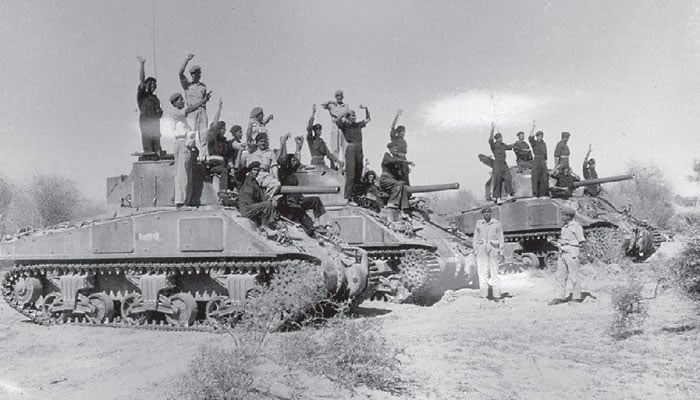
On 24 April, Pakistan launched "Operation Desert Hawk" a decisive thrust towards the Indian posts in the area deploying an infantry division and two armored regiments equipped with Patton tanks and field guns. The Pakistan Army captured four more posts and claimed the whole Kanjarkot stretch. With poor logistics and inferior military hardware, India had no other option than to retreat after offering decent resistance.[2] Pakistani soldiers atop captured Indian tanks raise slogans of joy.
Pakistani soldiers hoisted the flag of Pakistan over chamb after capturing the area from Indian forces in 1971.
The Battle of Chumb (3 December – 16 December 1971) was a major battle between the forces of Pakistan and India during the 1971 Indo-Pakistani war. It was one of the first major engagements in the western front of the war in which the Pakistani 23rd Division captured the strategically important city of Chumb from the Indian 10th Infantry Division.[1][4][5]




 MARKHOR 𓄅