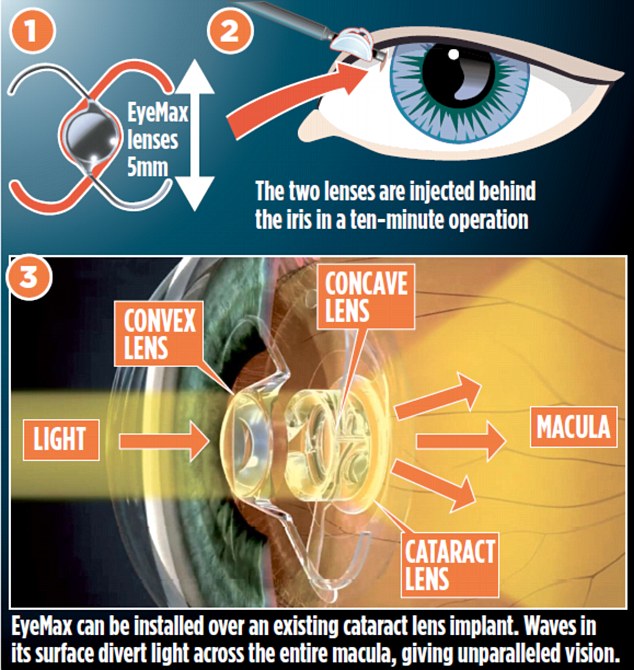
اس لینس کو کورنیا اور آنکھوں کے خمیدہ حصے کے درمیان لگایا جاتا ہے جسے سلکس کہتے ہیں، ماہرین، فوٹو: فائل
لندن: ماہرین نے پہلی مرتبہ عمررسیدگی سے لاحق ہونے والے لاعلاج نابینا پن کو دور کرنےکے لیے ایک خاص وائڈ اسکرین لینس تیار کیا ہے جسے سے دنیا بھر میں کروڑوں افراد کو فائدہ ہوگا۔
یونیورسٹی آف مورسیا، اسپین کے پروفیسر پابلو آرٹل اور لندن آئی اسپتا ل فارما کے چیف میڈیکل افسر کی جانب سے تیار کیے گئے اس لینس کو آئی میکس کا نام دیا گیا ہے جو حقیقت میں 2 لینس کا مجموعہ ہے۔ اس لینس کو کورنیا اور آنکھوں کے خمیدہ حصے کے درمیان لگایا جاتا ہے جسے سلکس کہتے ہیں، اس لینس کی بدولت آنکھ نہ صرف سیدھ میں ٹھیک طرح سے دیکھتی ہے بلکہ کسی وائڈ اینگل کیمرے کی طرح اطراف کے مناظر کو بھی دیکھا جاسکتا ہے کیونکہ لینس روشنی جمع کرکے پورے میکیولا پر گراتا ہے۔
50 اور 55 سال سے زائد عمر کے افراد میں بڑھاپے سے وابستہ نابینا پن ایک عام کیفیت ہے جسے ایج ریلیٹڈ میکیولر ڈی جنریشن کہا جاتا ہے۔ اس میں روشنی محسوس کرنے والے خلیات متاثر ہوتے ہیں اور رفتہ رفتہ پوری بصارت کم ہوجاتی ہے اور ایک منظر کی تمام تفصیلات ظاہر نہیں ہوتیں۔ لیکن اس وائڈ اسکرین وژن لینس سے اس مرض پر کافی حد تک قابو پایا جاسکتا ہے۔ ماہرین کا کہنا ہےکہ دواؤں سے مرض کی رفتار کو کم ضرور کیا جاسکتا ہے لیکن اس کا حتمی علاج موجود نہیں تاہم وائڈ اسکرین لینس بہت حد تک خمیدہ ہے اور اطراف سے روشنی جمع کرکے آنکھ کے حصے میکیولہ پر منظر ظاہر کرتا ہے اور اس کے آپریشن میں صرف 10 منٹ صرف ہوتے ہیں۔
ماہرین کے مطابق موتیے کے آپریشن سے گزر کر آنکھ میں لینس لگوانے والے مریضوں میں بھی یہ لینس لگوایا جاسکتا ہے کیونکہ یہ بہت چھوٹا ہے اور اس کے لیے مراحل سے گزر کر لینس کو بار بار ڈیزائننگ سے گزارا گیا۔ گزشتہ برس اس لینس کو لگانے کا کامیاب تجربہ 89 سالہ خاتون میں کیا گیا جس کے بعد ان کی ختم ہوتی بصارت بہتر ہوگئی۔
Re: بینائی واپس لوٹانے کے لیے وائڈ اسکرین لین
[h=1]The 'wide-screen' eye implant giving hope to millions: New lens offers unparalleled vision for sufferers of AMD [/h]
Age-related macular degeneration leading cause of sight loss for over-55s
Implants used to correct problem by redirecting light rays to different part
New lens is curved so it can project images across the entire macula
10-minute procedure is for those with intermediate and advanced AMD
The first lens implant to offer ‘wide-screen vision’ is set to transform the lives of millions of Britons suffering a debilitating eye condition. Age-related macular degeneration (AMD) is the leading cause of sight loss in the over-55s. It involves the gradual deterioration of the macula, a 5mm oval area in the centre of the retina – the light-sensitive cells in the back of the eyeball that enable detailed sight. The disease gradually robs people of their central vision, and about four million Britons have it, including 500,000 with late-stage AMD in which there are significant problems with sight. Although drug treatments can slow the disease’s progress, there is no cure.
The first lens implant to offer ‘wide-screen vision’ is set to transform the lives of millions of Britons suffering a debilitating eye condition
Previously, implants corrected this problem by redirecting light rays to another part of the macula, but restoring the centre of vision came at the expense of peripheral vision. In contrast, the new lens is curved in such a way that projects images across the entire macula, offering unparalleled all-round vision.
The ten-minute procedure is suitable for those with intermediate-stage and advanced AMD. And in another first, it is also suitable for those who have had a lens replacement due to cataracts, which was previously impossible. The EyeMax implant was developed by surgeon Bobby Qureshi and Professor Pablo Artal, an optics expert at the University of Murcia in Spain.
‘This has opened up the potential for clear vision to AMD sufferers who have been told they had no option but to eventually lose their sight,’ says Mr Qureshi, chief medical officer and founder of the London Eye Hospital Pharma.
EyeMax, like some other lens implants (collectively, they are known as IOLs, or intra-ocular lenses) actually comprises two lenses. They are inserted into the sulcus – the space below the cornea, or curved front of the eye, and above the lens – via a tiny incision in the front of the eye. One IOL is convex, or angled outward, and the other is concave, which curves in toward the patient’s own lens.
Asymmetric, microscopic waves in the face of each lens refract light and allow the eye to focus not just straight ahead but also across the whole field of vision with high resolution, like a wide-angled camera lens,’ says Mr Qureshi. ‘Traditional IOLs work by diverting light to a single point elsewhere on the macula, but this means patients only have high resolution vision in the central field. And as the disease progresses and more of the macula dies, this area of vision can be lost too. ‘Because the EyeMax diverts light across the entire macula, not just one point on it, vision is preserved for as long as possible.’ The other crucial advantage of this treatment, which costs 9,000 per eye, is that the lens is smaller than conventional implants and can be inserted into the eye in front of an existing implant. This means that patients who have had cataract surgery can now undergo AMD treatment. This was not possible before because they already had a lens in place of the cataract so there was no space to insert two additional lenses to treat their vision. The alternative would have been to take out the cataract lens, but this can cause complications. ‘It’s not easy to take out an implant,’ explains Mr Qureshi. ‘We have got around this issue through the shape of the implant and by making them small enough to fit in the space alongside an existing lens – whether that is the patient’s own lens, or an implant given to correct cataracts.’ The downside, admits Mr Qureshi, is that the macula will continue to degenerate, as the implant does not cure the condition. ‘But it does prolong eyesight for as long as possible,’ he adds. Anne Sackwood was one of the first UK patients to benefit from the new procedure. The great-grandmother was diagnosed with AMD in 2002 after having cataract surgery. Recently, the 89-year-old’s sight deteriorated and she feared this would rob her of the ability to recognise family members. Unable even to read bus signs, Anne could no longer go out alone and had to give up her hobbies including reading, knitting and sewing. With no NHS options available, her children went to see Mr Qureshi and she underwent the EyeMax procedure last summer. Her daughter, Fiona Sackwood, says: ‘It was heartbreaking to see Mum slowly losing the independence she had fiercely fought to protect. It was such as relief when Mr Qureshi said that she would be suitable for the AMD lens despite having undergone cataract surgery previously. ‘Mum has gone from being unable to read the optician’s vision chart to reading practically down to the bottom of it. She can also watch television, read the newspaper, knit and, even more importantly, focus on faces, meaning she can now recognise family and friends without having to hear their voices.’ The procedure is currently available only privately.
Re: بینائی واپس لوٹانے کے لیے وائڈ اسکرین لین
Thanks for taking your time to answer my question
But my question again is that this new research is also for person who had lost his sight in one or both eyes?
Well as far as glaucoma is concerned, the statement "had glaucoma in past" is incorrect. As it is a life long disease and once you get it, there is no way back. Only thing that can be done is slow its pace, so that its damage occurs slowly.
As far as your question is concerned, I am also interested in the answer as I myself have it.