A graphic showing the number of rape cases in India in 2011. The Wall Street Journal
Delhi has long been considered one of the most unsafe big cities for women in India. And north India is often referred to as more violent, more patriarchal, and more crime-ridden than the south.
To add some perspective to this debate, here is a look at statistics on reported rapes around the country.
[h=1]MUMBAI MATTERS: Step aside South Africa, India has the world's biggest rape problem[/h]By KRISHNA KUMAR PUBLISHED: 18:07 EST, 3 February 2014 | UPDATED: 18:07 EST, 3 February 2014
Why do we rape? And when I say 'we', I don't mean just men; our country as a whole is one unscrupulous, vengeful bunch of one billion plus rapists - men, women, children all included.
We are the rightful claimant of "the rape capital in the world" title, which is currently held by South Africa. Don't be disappointed, though. We are on our way to claim that unwanted title, for we have the dubious distinction of raping even the dead.
Yes, the Delhi gang-rape victim, who died in December 2012, was set upon again last week, when Asha Mirje, an NCP leader and a member of the Maharashtra Women's Commission, remarked that the girl had no business watching a movie at 11pm.
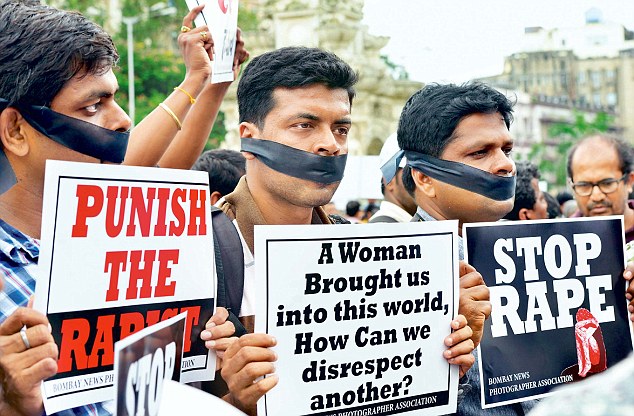
A protest after the Shakti Mills gang-rape in Mumbai last year
Mirje also blamed the Shakti Mills gang-rape victim for the incident, saying she should not have been at the isolated spot. Difficult as it is to write this, one has to agree with Mirje that women do invite rape. In fact, it is because of the attitudes Mirje and countless other women have in the country that rapes happen.
Mirje's comments were highlighted because she is a member of the Maharashtra Women's Commission. But make no mistake, what she said is echoed by a large number of women and men in the country. Here's an example: The grandmother of one of the accused in the Shakti Mills gang-rape in an interview to a foreign newspaper admitted that her grandson had raped the girl. But she also held the victim responsible for the rape as she was at the spot with her colleague. She also pointed to the way the girl was dressed.
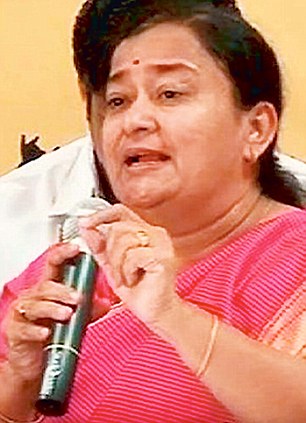
State women's panel member Asha Mirje's remarks on rape victims shocked many
To know why India is so helpless in stopping rapes even after the toughening of laws on crimes against women, one has only to compare the statements of both women. While one is the grandmother of a suspected rapist, the other is a member of a Women's Commission, which is supposed to fight for the justice of helpless women suffering abuse.
Their comments are similar to those made by women in Birbhum in West Bengal where a woman was gang-raped because she was 'promiscuous'. Why was she considered promiscuous? Because of the clothes she wore and because she was 'caught' with a man.
And, of course, how can men be blamed if such a promiscuous woman is taught a lesson. Right?
As revolted as one might feel, even highly educated women from well-to-do families hold such a view. Mirje, for instance, is a doctor. Many mothers teach their daughters and sons throughout their childhood that girls who 'dress up' or who talk to men or boys are 'bad'. So when such girls are raped, they were probably asking for it.
Unfortunately, even those who find Mirje's comments abhorrent change their tune when the rapist turns out to be a close family member. Like a recent high-profile rape case that has snared a biggie.
A malicious campaign is being run on the 'promiscuity angle' to disparage the victim. It says the victim wore short skirts, was 'friendly' with many men - and the best part (or the worst) : "It was not rape because the victim had a crush on him for a long time and had many a time in the past come on to him." Rape is so ingrained in our system that we have also made it part of our law enforcement. Till date, an outdated and archaic test to determine whether a sexual assault has occurred on a victim is carried out in almost all the states in the country. It involves the forensic doctor inserting his two fingers in the vagina of a rape victim. If the two fingers go in easily, it is assumed she was habituated to sexual intercourse. The test is supposedly relevant because it allows the defence to make a claim that the victim was habituated to sexual intercourse and thereby consented to it.
Again, the promiscuity angle comes up. One judge had the temerity to ask a girl who was raped and whose eye was gouged out in the process whether she was willing to accept the proposal of marriage by the guy who was about to be sentenced.
We have films and serials that show how it is the vamp and the girl with easy virtues who gets pregnant out of wedlock or raped. We have MPs who refuse to pass laws that make marital rape a crime.
[/COLOR] Two Indian police officers have gone on the run after allegedly kidnapping and raping a 14-year-old girl at a police station.
Authorities in the state of Uttar Pradesh have been searching for the constables since the attack on New Years Eve.
The victim had left her home to go to the toilet in a nearby field when she was bundled into a police car and taken to a Musajhag police station, in Badaun district, the Hindustan Times reported.
They locked my daughter in a room located in the police station. Later, they raped her and when her condition deteriorated they dumped her on the outskirts of the village at midnight, her mother said.
When she and her daughter returned to the station the next day to report the crime, the staff present would not record it, they claimed.
The complaint was only officially investigated after extensive Indian media coverage, the Hindustan Times reported, and the chief minister of Uttar Pradesh, Akhilesh Yadav, has now vowed to take swift action.
There are 1.5 million street kids in Pakistan -- an estimated 90% of them have been sexually abused at some point in their lives. Rape in Pakistan is so common, its barely taboo. Last week the Daily Mail interviewed a bus driver from Peshawar who says, after his shift is over, he likes to go into the slums and rape street kids. Sometimes he pays them a dollar. But often he doesnt he just joins in a big gang rape. Once, there was a boy on the bus and everyone had sex with him, he told the Daily Mail. I did it too but what else could I do? They invited me. And he was that kind of boy anyway. He says hes raped 12 different children. This wasnt a solitary rapist, hiding in the shadows, afraid of being seen or being caught. This was men joining together, unworried about social norms, unworried about someone stopping them. A poll of 1,800 Pakistani men found that a third dont think raping street kids is a crime and they dont even think its a bad thing to do. And then theres so-called honour killings where families kill their own daughters for social improprieties, real or perceived. Every year close to 1,000 Pakistani girls are murdered by their own fathers, brothers or even mothers, for moral indiscretions ranging from going out on a date to dressing in western clothing to marrying the wrong man. What a horrific duality -- a country that has normalized the rape of children, but would rather murder its own daughters than have embarrassing gossip about them. No wonder so many Pakistanis are happy to emigrate. Put aside the ongoing terrorist civil war, put aside official discrimination against minority religions, such as Christianity or even other Muslim denominations like the Ahmadiyyas -- Pakistan drives out its best, those who want a better life, a life of freedom and peace and safety. Canada is the lucky recipient of many such immigrants. The Suns columnist Tarek Fatah is a perfect example of that someone so Canadian he probably has maple syrup in his veins. But not all Pakistani immigrants prefer our liberal values to those of the Peshawar bus driver. Aqsa Parvez was a young woman who was murdered by her father and her brother for the honour crime of dressing and acting like a Canadian teenager. They imported the worst of Pakistan to Mississauga Rotherham, UK, has received another import: mass rape gangs. Between 1997 and 2013, that city of just 250,000 had 1,400 girls as young as 11 systematically groomed," raped and prostituted by Pakistani gangs. Fourteen-hundred out of a city of 250,000. The girls were white Christians; in the eyes of the Pakistani Muslim gangs, they were sub-human, like Pakistans own street orphans. Rotherham police knew all about it. But they were paralyzed with fear fear of being called racist if they dared to act. They found the mass rape of a generation of the citys girls less intolerable than the risk of being called politically incorrect or Islamophobic." Back to Canada. Pakistan is the fourth largest source of immigrants to our country nearly 100,000 in the past decade. Most of them are wonderful, peaceful Canadians, like Tarek. But how many are like the Peshawar bus driver, or the Rotherham rape gangs, or Muhammad Parvez? Pakistan, like some other Muslim countries, has a rape problem. Perhaps before opening up the floodgates, we might want to do something as simple as asking a prospective immigrant for their views on women, rape and honour.
[h=1]Is India the most pathetic country in the world?[/h]
About 40 crore people in India still have NO ELECTRICITY at all in more than 80,000 villages. (World Bank Report) And others like us in even big cities face long power cuts.
About 650 Million (65 Crore) people in India still live without any type of Toilets! Thats 50% of population!! Pathetic.
About 68 % of Educated Indian Youth is living on an income of 5 - 8 Thousands per month.So Low!
India stands worst in Human development Index.(world Bank)
India stands worst in Per capita income and living standard of people.(Its just $1100 per year)
The developing India which we see on internet media etc.. is just the Tiny part of India...
There r 1600 cities in India..how many r developed? U can count them on fingers! and what about others?? They r Hell holes full of people living in Pathetic lifestyle!! with no roads and electricity and Super low income!
[h=1]India can win Nobel for filth, says Jairam Ramesh[/h][h=1][/h] TNN | Nov 21, 2009, 12.53AM IST
in
[COLOR=#333333 !important]Share
[/COLOR] NEW DELHI: Environment minister Jairam Ramesh, known for courting controversy and making candid remarks, on Friday said if there was a Nobel Prize for dirt and filth, India would get it. ( Watch Video )
"Our cities are the dirtiest cities of the world. If there is a Nobel Prize for dirt and filth, India will win it, no doubt," he said at a function to release a report 'Green India 2047' by The Energy Research Institute (TERI).
The minister was talking in reference to poor facilities for disposing municipal waste in a majority of Indian cities.
"I think our cities have the dubious distinction of being the dirtiest cities in the world. There is no doubt about it. But if there is a Nobel Prize for dirt and filth, India will win it hands down. There is no competition for that and we have to do something dramatic on municipal solid waste," Ramesh said.
The report he released states that unclean air and water could be responsible for the death of eight lakh people every year in the country.
"Our limited analysis suggests that unclean air and water may be taking a toll in terms of over eight lakh deaths in the country each year and morbidity costs amounting to 3.6% of GDP," the report said.
R K Pachauri, head of TERI and chairman of the Nobel-winning UN IPCC said, "It is important for every sector and every section of society to understand that protecting the environment is not a luxury. It's an intimate part of promoting the economic welfare of people."
He added that about 45% of the population did not have access to safe drinking water and the air quality was poor in most Indian cities.
[h=1]Man India is the most pathetic country on Earth[/h] JESUS christ. For all who saw the deleted India thread. They have 1 billion people and they have acheived NOTHING. Go look at Indian acheivements. Won't find jack ****.
Man rising economy my fukin ***. Dead bodies floating in the river people brush their teeth in. WTF? I couldn't even finish my meal aftert watching that (srs). SICK!
Children are one of the most vulnerable sections of the Indian society. They are the building blocks of the nation and are still exploited to extremes. How can a country advance if its base itself is so weak? Due to the high population rate, majority of our population is still young. Children are innocent, tender, shy, and these characteristics often lead to their exploitation. They are not only subjugated outside but also within families. One would find young children begging at almost every traffic light. They are seen as additional hands to earn in most of the households. Has anyone ever wondered what they feel and want? At the age when they should be studying, they do everything to make ends meet on a daily basis. What is literacy to them when even they need to struggle for basic survival? Many of them are sold off to brothels or are sold off as servants. Sadly, many of them are used to fulfill perverted sexual desires; this happens even within families. A father using his own daughters to satisfy himself is something which can only be called gross. Bitter as it is, this is the truth. A lot of our below twelve population is also engaged in domestic households as servants. Our law says encouraging child labor is an offence. But who cares? This is the attitude of most of us. Many families keep young boys and girls as servants even though they are educated enough to know that child labor is a punishable offence. Furthermore, these children are treated extremely cruelly. They are not given enough food and are made to do hard demanding work. In return, they get little pay and a lot beating. Even well to do families sometimes do not treat their children properly. It happens that when both the parents are working, children are left to fend for themselves. They get no emotional support and the love and affection they crave for. Domestic violence is also a reality which many of us tend to overlook. Many fathers beat up their wives and then proceed to beat up their children. Children become victims of their parents’ frustration. It is high time every person in the society understood the gravity of the situation. Children should be given a proper platform to fight against their exploitation. The laws should be made more stringent and it should be ensured that their implementation is not just on paper! Parents should feel responsible. Our efforts should be directed towards the education of the youth and a person can learn only when his mental state is in a balance. To help the country advance, we need to strengthen its base. Aparna Vyas
[*=left]Children feel the pain Domestic Violence, quite obviously, has a serious impact on the wife who is battered and flung about the house daily....
[*=left]Handling Children Some children show slow progress. Instead of bearing a defeatist attitude and failing the child by remaining oblivious to his...
[/COLOR] Tags:literacy
[h=2]Write your opinions below[/h]
[*=left]
santosh kulkarni, on November 11th, 2008 at 9:22 am Said:
A very good article giving real picture about the status of children in India at present.Hope people take initiative to improve the condition of children without depending upon govt. to do something. A widespread movement is a must to improve the condition of children.
NEW YORK: The geriatric population of India is expected to reach 180 million in 2031 and touch 301 million in 2051 and would become second largest elderly population in the world, according to Dr Mamta Jain, Chief Operating Officer of Sarvodaya Hospitals in Faridabad, Haryana.
Painting a grim picture, Dr Jain who was in New York to attend the annual Convention of the Association of American Physicians of Indian Origin (AAPI) recently said majority of India’s elderly – about 80 percent – live in rural areas, of which 40 percent live below the poverty line.
About 90 percent of them have no social security such as Provident Fund, Pension scheme, Gratuity and healthcare, she said.
Also, with changing family structures from joint to nuclear or small unit families, these elders are without a safe, secure and dignified status. Welfare of the elderly has become a low priority of different state governments, she averred. “Unfortunately, governments do not care about geriatric care and the senior citizens are left to fend for themselves,” she regretted.
Most major hospitals in India have no separate geriatric care specialties and at present most of the elderly patients are treated in general medical wards.
There is only one educational institution in Chennai that offers post graduate degree in geriatric medicine. And worse, nurses and para-medical staff is not adequately trained in geriatric care, she said.
Dr Jain, a crusader in her fight for equal rights for the elderly, said government should encourage geriatric units in hospitals and private clinics; emphasize on family care for the elderly through incentives and schemes for needy families.
Subsidizing old age homes and day care centers was another move to be contemplated, she said. NGOs have a greater role to play in creating awareness, imparting information, and training of support services, she added.
Dr Jain, who heads two hospitals in Faridabad, Delhi, did her medicine at Yerevan State Medical University in Armenia and followed it up with an MBA in IIM-Calcutta and MBA in health care systems and a post graduate diploma in quality program in hospital and healthcare system. She also did a post graduate diploma in medico legal systems from Symbiosis Institute in Pune.
Dr Jain feels that ensuring participation and sensitizing NGOs, corporate houses and charitable foundations could help resolve the problem.
Also creation of specialty hospitals and care centers for elderly population in urban and rural areas would go a long way in addressing the issues, she said. “With elderly population on the rise, there is an urgent need to learn from the model of geriatric care in developed nations such as the US,” she added.
[h=1]Public toilets in pathetic state: Study[/h]Added At: 2012-11-20 7:00 AM Last Updated At: 2012-11-20 7:00 AM
HIMALAYAN NEWS SERVICE KATHMANDU: Poor condition of public toilets in the Kathmandu Valley is repelling people from using them, an NGO survey said today.
The municipalities are far behind when it comes to fulfilling the growing demand of public toilets and urinals, said NGO Forum for Urban Water and Sanitation, making public its survey on ‘Public Latrines in Kathmandu valley’on the occasion of ‘World Toilet Day’.
It described physical and sanitary conditions of public toilets as pitiable. Of the total 68 public toilets identified in Kathmandu, Lalitpur and Bhaktapur, only 61 are working properly, of which 42 (67 per cent) have taps installed inside, while 17 of them have taps installed outside.
Despite having taps,
only 26 (41 per cent) of the total functioning toilets have water facilities, the report said, adding that there is only one toilet per 65,000 urban population in the Valley.
The safety issue of
public latrines is especially important for female users, but only 71 per cent of the total latrines have proper lock system, while only 79 per cent have separate toilets for male and female, the report said.
Almost all the toilets are in deplorable condition with stinking smell and bad odour, it pointed, adding that only 16 latrines are without bad odour.
Every toilet in Kathmandu, Lalitpur and Bhaktapur are connected to the sewer line directly except the ones along the Bishnumati River in KMC which are directly connected to the river to dispose waste, the report said.
The study was carried out to identify the public toilets that have enough catchment area for construction of rainwater harvesting systems and enough space for wastewater treatment plants.
Of the 63 public toilets across the valley, only three in Kathmandu and two in Lalitpur are suitable for rainwater harvesting systems.
Eight public toilets – two in Kathmandu, four in Lalitpur and four in Bhaktapur – have space for wastewater treatment plants.
On an average, one public latrine serves 300 users per day of which one-third are female users in five municipalities of the valley.
The study further said lack of separate toilet facilities had affected mostly the children, elderly and physically challenged people.
About 93 per cent of the users said the current availability of public toilets was grossly insufficient to meet the requirement of the urban population.
According to the government’s estimation, 14 million people are deprived of access to basic sanitation facilities in Nepal.
About 500 out of the 3915 VDCs, three out of the 58 municipalities and three out of the 75 districts across the country are Open Defecation Free areas.
Among the oldest artefacts dating from the early days of the British Raj is a woodcut-print showing hectic (by the standards of the time) trading activity in the port city of Surat. Situated on the banks of the Tapi river in Gujarat, the city has always been an important one. But since 1970, its growth has been phenomenal. The population of this 12th largest among the Indian cities has nearly quadrupled in the last 2 decades. Along with the flourishing traditional industries of silk embroidery and diamond polishing, the modern ones of textile, plastic, chemicals and rayon industries are now dotting the map of the township. The labour force has multiplied, many of them migrants from neighbouring states. The results have been predictable: acute housing crisis and a crumbling municipal system. Water supply, drainage, electricity, roads and health care cannot keep pace with the ever growing demands of the burgeoning population. Public spaces are shrinking due to lanes being blocked off for private use. And no one gripes if the roads remain blocked by shamianas (decorative tents) erected for wedding ceremonies. Surat's affluent urbanites -- some of who are unthinkably rich -- dump their daily refuse just outside their own homes. For them, only their private spaces need be clean, the public place can go to the dogs. Wealth and filth are inseparable partners in Surat. In many posh, upperclass localities, such as Adarsh Society, one sees large garbage bins installed by the corporation. More often than not, however, the refuse and garbage are thrown outside the bin. In the poorer localities such bins are a rarity and garbage is merrily dumped off at a common point, or even just outside the houses. Public utilities, such as toilets, urinals and water posts are in a pathetic condition. The few toilets that exist are patently unusable. Their faulty construction and, added to that, the callous misuse by the locals make them into festering wounds on the city's body. The water posts are pools of slush and muck. The problem is progressional. Bad urinals, or their complete absence, lead the denizenry to turn any available streetcorner into a relieving haven. People defecate in the open. Spitting is a local pastime, and public buildings are special targets. Railway stations, bus-stands, roads and government offices give newcomers the nauseating feeling of having to move about in huge concrete spittoons. And there are no pursed lips or raised eyebrows from any quarters. The municipal corporation building at Muglisara and the Collector's kacheri (office), known as the Bahumali Makan, are testaments to the wonder of paan (betel leaf) spitting. Every corner, corridor and wall is plastered with paan and spittle. The hospitals, public or private, are nightmares for not just the patients...even dedicated Florence Nightingales would fear to tread in. The Indians' attitude towards bodily discharges and garbage can be explained by their principles of purity and impurity. Not only persons, but also places, things, flora and fauna and events are ranked hierarchically according to their purity or pollution. In fact, the whole concept of untouchability rests on the principle of purity and pollution. It is surprising that this attitude of keeping private places meticulously clean, and yet, caring two hoots about public ones even pervades the upper classes of Indians. The toilets in 5-Star hotels as well as in the international airports get no better treatment from customers, despite their upperclass status. Indians insist upon ritual purity, but that need not necessarily add up to cleanliness or hygiene. The bath taken in a village pond on returning from a cremation, and prior to entering the village, is a ritual, having nothing to do with hygiene. The attitude towards garbage and household waste is a cultural one in India. It is a mindset. In rural areas also, where space is not a constraint, reasonable hygiene does not prevail. In urban areas this cultural attitude creates insanitary conditions. These aggravate during excessive rains and floods because of the grossly inadequate civic amenities and a careless civic administration. Epidemics, therefore, find a well-fermented bed custom-built for them.
Lancy Lobo is a member of the faculty at the Centre for Social Studies, Surat
[h=2]The nations central bank recently blamed the U.S. Federal Reserve for its economic problems, but Indias challenges run deeper than monetary policy.
[/h]
Raghuram Rajan, governor of the Reserve Bank of IndiaFORTUNE In the wake of a global stock market selloff driven by worries over slower growth in emerging markets, the head of Indias central bank, Raghuram Rajan, criticized the U.S. Federal Reserve as it pressed on with plans to dial back its monthly bond purchases: International monetary cooperation has broken down, said Rajan, who added that the U.S. should worry about the effects of its polices on the rest of the world. Rajan later backtracked, but his remarks highlight the vulnerabilities of Indias economy. Theoretically, the Feds taper, and investors expectations of a rise in interest rates, would cause capital to leave India for the U.S. With higher returns available abroad, investors demand for Indias rupee would fall, further weakening the currency and raising inflation. Already, Indias economic growth has declined to 4.5% in 2013 from an average of 9% over the past decade; inflation is high at 9.9%. If Indias central bank has to keep raising interest rates to prop up the rupee, it could further impair the nations economic progress. Indias Catch-22, however, is of its own making. While economic growth has been robust, its national infrastructure is severely underdeveloped. From crumbling roads, traffic congestion, and poor public transportation to unreliable electricity and water supply and declining educational standards (Microsofts new CEO Satya Nadella being the exception, not the norm), Indias national foundation has failed to keep pace with the financial prosperity of its private sector. MORE:Bitcoins no good, horrible, very bad few weeks Part of this is due to overpopulation and a strain on resources, but the rest is due to a lack of interest both in public and private spheres for developing infrastructure. Industries such as telecommunications and information technology continue to grow, but the benefits of that growth accrue to a small subset of the population, leaving the bulk of the country in poverty and rural limbo. (Indias per capita income is the lowest of the BRICs nations. and three out of four people in rural areas live in poverty.) Chinas income per capita isnt that much better, but its small towns have become thriving manufacturing hubs that have allowed the country to maximize the use of its resources and labor force. (The recent contraction in Chinese manufacturing is the result of a tightening in credit markets, not an indictment of the countrys growth strategy). Without such critical investments, Indias long-term growth could be jeopardized. As for inflation, Indias rapid growth has caused prices to soar, but since that wealth is concentrated in very few hands, average Indians cannot afford the higher prices. In response, the central bank has raised interest rates, but that will only lower the tide for all boats. Higher borrowing costs hurt business profitability but wont stop inflation as long as price hikes are also being fueled by another source: corruption. Last year, India ranked 94th out of 176 countries in Transparency Internationals Corruption Perception Index . An even bigger problem is that while the business community complains bitterly about government corruption, it also exacerbates it through its willingness to pay bribes to bypass the law. Large corruption scandals involving major companies in telecommunications, construction, coal mining, and other industries are commonplace, and a 2011 study conducted by KPMG suggests that the private sector actually induces corruption in India, at least to some degree. MORE:Janet Yellen loves a quitter The result is a culture of venality that affects even basic government services and increases the cost of doing business. This raises the price of everything, including produced goods, services, electricity, water, and telephone service to create de facto inflation. It also discourages foreign investment, especially from institutions in the U.S. and Europe, who dislike paying bribes and worry about violating anti-corruption laws in their home country. All this, in turn, puts even more pressure on the currency. The Indian economy will certainly keep growing, if for no other reason than pent-up demand, and Indian companies will continue to compete aggressively on the world stage, but if Rajan wants to curtail inflation and maximize that growth at the same time, then his government must address the problem of corruption properly, invest in the infrastructure of the nation, and expand the utilization of its workforce. Monetary policy alone in India or in the U.S. cannot solve these problems. Sanjay Sanghoee is a political and business commentator. He has worked at investment banks Lazard Freres and Dresdner Kleinwort Wasserstein, as well as at hedge fund Ramius. Sanghoee sits on the Board of Davidson Media Group, a mid-market radio station operator and has an MBA from Columbia Business School. He is also the author of two thriller novels.
[/COLOR] Two Indian police officers have gone on the run after allegedly kidnapping and raping a 14-year-old girl at a police station.
Authorities in the state of Uttar Pradesh have been searching for the constables since the attack on New Year’s Eve.
The victim had left her home to go to the toilet in a nearby field when she was bundled into a police car and taken to a Musajhag police station, in Badaun district, the Hindustan Times reported.
“They locked my daughter in a room located in the police station. Later, they raped her and when her condition deteriorated they dumped her on the outskirts of the village at midnight,” her mother said.
When she and her daughter returned to the station the next day to report the crime, the staff present would not record it, they claimed.
The complaint was only officially investigated after extensive Indian media coverage, the Hindustan Times reported, and the chief minister of Uttar Pradesh, Akhilesh Yadav, has now vowed to take swift action.
Why INDIA is in trouble….
(for my people ONLY ;) )
Population: 100 crore
9 crore retired 30 crore in state Govt;
17 crore in central Govt.
(Both categories don’t work) 1 crore IT professional (NEVER work for India ) 1 crore are under 5 years25 crore in school 15 crore unemployed 1.2 crore u can find anytime in hospitalsStatistics says u find 79,99,998 people anytime in jail The Balancetwo are U & Me.
Uare busy ” Seeing my Blog
“..!!HOW CAN I HANDLE INDIA alone? Oh God! Live! Love!! Laugh!!!
There are 1.5 million street kids in Pakistan -- an estimated 90% of them have been sexually abused at some point in their lives. Rape in Pakistan is so common, it’s barely taboo. Last week the Daily Mail interviewed a bus driver from Peshawar who says, after his shift is over, he likes to go into the slums and rape street kids. Sometimes he pays them a dollar. But often he doesn’t – he just joins in a big gang rape. “Once, there was a boy on the bus and everyone had sex with him,” he told the Daily Mail. “I did it too but what else could I do? They invited me. And he was that kind of boy anyway.” He says he’s raped 12 different children. This wasn’t a solitary rapist, hiding in the shadows, afraid of being seen or being caught. This was men joining together, unworried about social norms, unworried about someone stopping them. A poll of 1,800 Pakistani men found that a third don’t think raping street kids is a crime – and they don’t even think it’s a bad thing to do. And then there’s so-called honour killings – where families kill their own daughters for social improprieties, real or perceived. Every year close to 1,000 Pakistani girls are murdered by their own fathers, brothers or even mothers, for “moral indiscretions” ranging from going out on a date to dressing in western clothing to marrying the wrong man. What a horrific duality -- a country that has normalized the rape of children, but would rather murder its own daughters than have embarrassing gossip about them. No wonder so many Pakistanis are happy to emigrate. Put aside the ongoing terrorist civil war, put aside official discrimination against minority religions, such as Christianity or even other Muslim denominations like the Ahmadiyyas -- Pakistan drives out its best, those who want a better life, a life of freedom and peace and safety. Canada is the lucky recipient of many such immigrants. The Sun’s columnist Tarek Fatah is a perfect example of that – someone so Canadian he probably has maple syrup in his veins. But not all Pakistani immigrants prefer our liberal values to those of the Peshawar bus driver. Aqsa Parvez was a young woman who was murdered by her father and her brother for the honour crime of dressing and acting like a Canadian teenager. They imported the worst of Pakistan to Mississauga Rotherham, UK, has received another import: mass rape gangs. Between 1997 and 2013, that city of just 250,000 had 1,400 girls – as young as 11 – systematically “groomed," raped and prostituted by Pakistani gangs. Fourteen-hundred out of a city of 250,000. The girls were white Christians; in the eyes of the Pakistani Muslim gangs, they were sub-human, like Pakistan’s own street orphans. Rotherham police knew all about it. But they were paralyzed with fear – fear of being called racist if they dared to act. They found the mass rape of a generation of the city’s girls less intolerable than the risk of being called politically incorrect or “Islamophobic." Back to Canada. Pakistan is the fourth largest source of immigrants to our country – nearly 100,000 in the past decade. Most of them are wonderful, peaceful Canadians, like Tarek. But how many are like the Peshawar bus driver, or the Rotherham rape gangs, or Muhammad Parvez? Pakistan, like some other Muslim countries, has a rape problem. Perhaps before opening up the floodgates, we might want to do something as simple as asking a prospective immigrant for their views on women, rape and honour.
We are the diabetes capital of the world. That makes us high-risk TB contractors. Is thin-fat India in trouble?
First came the bad news: With 30 million Indians diagnosed with diabetes, this country holds the world's second largest population with the disease, and is likely to reach the top spot within 10 years. Add to this, India has the highest number of people with active tuberculosis (TB).
It doesn't get better.
Last week, a study commissioned by The Lancet, reported that the diabetes epidemic is closely linked with rising cases of TB. The study says diabetes is making an increasingly important contribution to India's TB epidemic, as it is in other diabetes prone nations. In the last three years, a 52 per cent increase in diabetes prevalence has been recorded in 22 countries with the highest number of TB cases.
What is it that links a non-communicable disease to a communicable one?
Immune crash
Dr Manoj Chaddha, consultant endocrinologist and diabetologist at Khar's Hinduja Healthcare Surgical, says, "High blood sugar levels weaken a person's immune system. So, diabetics are at high risk for all sorts of infection. Which is why even a common cold takes longer to cure in a diabetic."
It doesn't help that mycobacterium tuberculosis, the causative agent of most TB, is an air-borne microbe as opposed to a water-borne microbe, thus leaving us always exposed to the infection.
The Indian diet, high in starch, is not just making us prone to diabetes but also to TB, points out Dr Shashank R Joshi. "The Indian vegetarian diet, especially, is protein deficient. The TB microbe has been seen to thrive in a protein deficient environment," says the endocrinologist at Bandra's Lilavati Hospital, also the president of Association of Physicians of India.
Dr Joshi, who authored a 2009 study, along with Dr Tiyas Sen and Dr Zarir F Udwadia (both are consultant chest physicians at P D Hinduja Hospital and National Research Centre) titled, Tuberculosis and Diabetes Mellitus: Merging Epidemics, says that the lack of protein, a critical nutrient for a better immune system, also means that the body's muscle mass is low.
"This explains the high incidence of thin-fat Indians. It refers to someone who may appear lean, but his body mass percentage of fat is high, which makes him more susceptible to diabetes and thus, TB," Dr Joshi adds.
Reactivated TB
The rule of 10 applies to the interlinking of the two diseases, he explains. Ten per cent of all patients with diabetes will have TB and 10 per cent of all patients with TB will suffer diabetes.
While how diabetes makes a patient prone to TB is evident, the reverse is unclear.
The 2009 article states: Studies conducted after the introduction of the glucose tolerance test in the 1950s, have shown high prevalence of impaired glucose tolerance test in patients with tuberculosis with rates ranging from two per cent to 41 per cent. Why this happens, however, is not clearly understood yet.
Dr Vikas Oswal, a TB and chest consultant at Shatabdi Hospital and a consultant at Sunrise Hospital, who also has a practice at Chembur, says the diabetic-patients-with-TB he sees come in with the same symptoms - lethargy, fever and cough for two weeks that anti-biotics haven't helped cure. Not all however, need to have been recently exposed to the TB bacteria.
"In many cases, patients who may have had TB earlier, and have seen the bacterium lay dormant after medication, could develop active TB if they are detected with diabetes. The immune system is now unable to suppress the bacteria," he explains. In India, Dr Oswal says, three lakh people die of TB every year and 1.9 million Indians develop the condition annually.
In a 2013 editorial for Thorax, a peerreviewed medical journal, which Dr Udwadia co-wrote, he said that in almost a fifth (19%) of all cases, re-infection occurred with a different genotype of TB, indicating spread of the disease, "possibly from attendance by diabetics at clinics with high local TB prevalence. This confirmed again that healthcare settings should be considered high-risk environments for disease spread for our vulnerable patients".
Tougher to treat
Many physicians, Dr Oswal says, treat a patient for TB without confirming the diagnosis. "Only upon sputum examination should a patient be given TB medication. Otherwise, chances of the disease turning drug-resistant are high. Also, patients must complete the course without a break," he warns.
Dr Udwadia says not only are diabetics more prone to TB, but "once they develop it, they also fight it off more slowly." And so, the WHO standardised four-drug treatment won't work in patients with the dual diseases. Dr Chaddha says, "The patient is getting less support from his own body. While a regular TB patient can be cured within six months, a diabetic could take anywhere between 10 to 18 months."
And before you sign off thinking that as an urban middle-class Indian, you aren't the target reader for this story, here's a clarification from Dr Joshi: "Just as diabetes is no longer the rich Indian's disease, TB is no longer the poor man's burden. There are no class boundaries to these ailments anymore."
[/COLOR]
[/COLOR]Stay updated on the go with Times of India News App
India is in desperate need of reforms. With economic growth at a ten-year low, the rupee down over 12% year-to-date against the dollar, capital outflows, and collapsing corporate profits, it's no surprise that biggest story in India over the next year are the May 2014 elections. Unfortunately, the government isn't expected to pass any major reforms between now and May 2014, and risk voter wrath. What's worse, it's looking less likely that the incoming government will have the clear majority needed to pass any drastic, growth-stimulating reforms. The latest opinion polls show the Congress party (which is largely expected to push populist measures) and the Bharatiya Janata Party (BJP - which is fiscally conservative and focused on a development agenda) losing ground to a "third-front coalition." The third-front refers to regional parties, that are now expected to win nearly 50% of seats in parliament. India holds general elections every five years, so, if elected, this third-front could stay in power till 2019. The president can however dissolve the lower house of parliament in extreme circumstances and call for general elections before the five-years are up. The rise of the third front is bad news because the smaller parties have their own agendas and are likely to push for reforms centered on certain regions or communities, and are "unlikely to have strong national policies," argues CLSA analyst Mahesh Nandurkar. "We see the chances of a weak leadership largely made up of regional parties - each with their own agenda and incapable of pursuing the bold reforms needed to kick-start India’s economy - as the most probable scenario," writes Nandurkar. "This would usher in a period of prolonged weak and patchy policy making." And the make-up of the government is likely to moves markets. From Nandurkar: "Market reaction to electoral results can be strong and immediate. Following 2009 election results, the market moved rallied 17% over two days as the ruling Congress won a stronger-than-expected mandate. After the 2004 result, the market dropped 17% in two days as the right wing BJP lost unexpectedly and a Congress coalition, supported by left-wing parties, came to power. In both cases, Congress won the elections." Nandurkar expects a third-front coalition to claim 200 - 250 seats. He expects both the BJP and Congress to "woo" the regional parties and form alliances. Of course political alliances are prone to change and the results of the upcoming state elections in November and December will also weigh on the 2104 elections. Moreover, there are 70 million new voters, or 10% of the electorate, that will take part in the 2014 elections and this could also impact the outcome. Earlier this year, the Financial Times reported that in a "confidential note" the IMF was forced to make "a humbling series of U-turns over its global economic assessment."At a time when growth in developed markets is just beginning to return, emerging markets have failed be the engine of growth that the world had come to expect. This is obviously key for foreign investors and businesses looking to make a footprint in India.
I think its all the exposure they get from revealing bollywood movies. I recently barely watched happy new year There was so much skin n less clothes that after one somg i could not watch with my family n discard. LOL



 1.3k
 1.3k


 A graphic showing the number of rape cases in India in 2011. The Wall Street Journal