
- Joined
- Jun 25, 2013
- Posts
- 4,503
- Reaction score
- 1,123
- Points
- 113
Thread starter's comments :
First is the article by Hussain Haqqani , dismissive of Pakistan as usual , in the indian newspaper called www.thehindu.com , he was once an adviser to Nawaz sharif , Second article is published in Arab News , the saudi newspaper , but the writer is a decorated former Indian diplomat.
In my previous posts I have pointed out that natural heir to Nawaz is shahbaz not Maryam and it is apparent now by nominations but the legal cases seem to dicatate some thing else . It appears that as Shehbaz is not MNA and Hamza Shehbaz not a MPA , so matter of Shahid Khaqan Abassi as interim PM is not sound as the legal case is ongoing . At this time holding on to Punjab is important and Shehbaz best stay there and centre needs a stronger PM of coalition of ANP, JUI , PMLN and some Baluch leaders with possible MQM Pakistan . PPP would love to switch sides and join this coalition but only if same occurs in punjab.
My view is that this matter , neither in courts and nor in political arena will go according to establ. plan , some important local and regional power calculations have not been done and end result will be unexpected for all . Especially Imran khan .
Pakistan is a country not easily altered , if you read 1650 book by Francois Bernier about this region you will be shocked how little have we changed.
[h=1]Pakistan sticks to a sad tradition[/h] Husain Haqqani
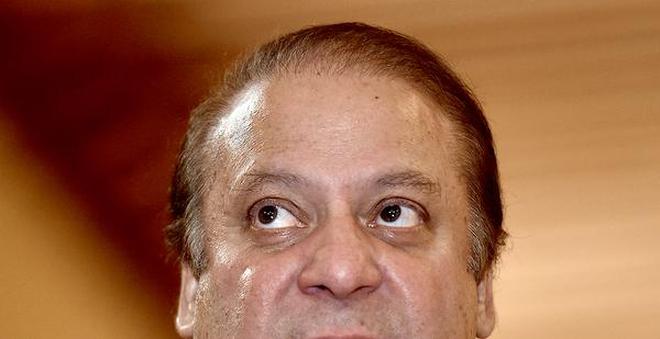
[h=2]Nawaz Sharif is clearly a flawed man but the manner of his removal from office is even more flawed[/h]The decision by Pakistan’s Supreme Court to disqualify Prime Minister Nawaz Sharif reaffirms the iron law of Pakistani politics: a politician can amass wealth and engage in corruption only as long as he does not challenge the ascendance of the country’s powerful national security establishment. Although Mr. Sharif has ostensibly been disqualified over the so-called Panama Papers, which exposed holders of offshore bank accounts, the verdict against him has little to do with the revelations in the Panama Papers.
Mr. Sharif and his family have definitely expanded their assets several fold since his entry into politics more than three decades ago as a protégé of the Islamist military dictator, General Zia-ul-Haq, and the former chief of the notorious Inter-Services Intelligence (ISI). But he was not put on trial for corruption and convicted. Instead, the Supreme Court acted politically, as it often does, and created a Joint Investigation Team (JIT) that included military intelligence representatives. The JIT’s job was ostensibly to uncover the trail of the Sharifs’ wealth and the Supreme Court used the JIT’s findings to determine that Mr. Sharif could no longer fulfil the constitutionally mandated qualifications for his office.
When he ended Martial Law, General Zia had added several provisions to Pakistan’s Constitution, some of which related to moral qualifications for membership of parliament. Their purpose was to give the all-powerful national security establishment a constitutional instrument to control the political process even after the military’s withdrawal from direct political intervention. Those provisions have finally been invoked to rid Pakistan of a meddlesome Prime Minister.
[h=2]Articles of expediency[/h]During the 1990s, civilian Prime Ministers who failed to toe the line in key policy areas could be dismissed by the President, who was always a reliable establishment figure. After three dismissals, twice of the army’s bete noire Benazir Bhutto and once of Mr. Sharif, the civilians got rid of Article 58-2(b) of the Constitution that authorised the President to unilaterally dissolve Parliament and dismiss Prime Ministers. The absence of the establishment’s safety valve paved the way for General Pervez Musharraf’s military coup in 1999.
Aware that the 21st century is less conducive to direct military takeovers than preceding decades, Gen Musharraf reintroduced the notion of presidential dismissal before sharing power with civilians again. The civilians dispensed with it again in a consensus constitutional package in 2008. Since then, Articles 62 and 63 of the Constitution, inserted by Zia and ironically kept alive with the support of Mr. Sharif and Pakistan’s religious parties, have been cited as the means whereby the establishment can keep politicians on the straight and narrow.
In its judgment disqualifying Mr. Sharif, the Supreme Court has found him in violation of Article 62(1)(f) that demands that members of Parliament be “sagacious, righteous, non-profligate, honest and Ameen”. The last of these, “Ameen”, meaning ‘the keeper of trust’ is one of the attributes of Prophet Muhammad, which by definition is a hard standard to meet for any Muslim who deems the Prophet ‘the most perfect’ human being. Ordinary mortals can easily be found in violation of that noble standard.
By claiming the right to disqualify any elected representative of his/her office for not meeting such exacting standards of probity, the Pakistani Supreme Court has arrogated to itself the authority similar to that of Iran’s Guardian Council, which vets all candidates for elective office. The Council routinely disqualifies politicians on grounds that they are not sufficiently dedicated to Islamic values.
[h=2]Setting a precedent[/h]The disqualification of Mr. Sharif sets the precedent for future judicial coups. That does not mean Mr. Sharif has not amassed wealth beyond explainable means or does not have property across the world that might have been acquired through questionable transactions. But corruption must be dealt with by legal means, not on the say of rival politicians or intelligence operatives operating without being subject to laws of evidence.
If legally admissible evidence of corruption had existed, there would have been a trial, not direct intervention by the Supreme Court, which should only be the court of final appeal in criminal matters. So what is really going on? Pakistan is simply keeping its sad tradition that disallows politicians to ever be voted out of office by the voters who elected them to that office in the first place.
In the last seventy years, all Pakistani Prime Ministers have either been assassinated, dismissed or forced to resign by heads of state with military backing, or deposed in coups d’etat. Mr. Sharif is the second Prime Minister, after Yousuf Raza Gilani, to be sent home by an activist Supreme Court amidst an orchestrated media furore. Ironically, Mr. Sharif was installed as Prime Minister in 1990 by the military in intrigue that was exposed decades later. That intrigue involved the army creating the multi-party alliance, Islami Jamhoori Ittehad (IJI), through the ISI and funding Mr. Sharif and others with money taken from corrupt businessmen. At that time, the Pakistani establishment deemed Benazir Bhutto ‘a security risk’ over her avowed desire to change attitudes towards India and the rest of South Asia.
Mr. Sharif fell out of the army’s favour when he decided to assert himself in the conduct of foreign and national security policy after becoming Prime Minister. He was ousted once by the President and a second time by the army chief in a coup. Elected for a third time, he has now been sent packing through the Supreme Court. He is clearly a flawed man but the manner of his removal from office is even more flawed.
[h=2]The India connection[/h]During the Panama Papers saga, Mr. Sharif was accused in social media of being an Indian agent and rumours swirled of his alleged investments in India and ‘secret partnerships’ with Indian businessmen. This reveals the real cause of anxiety with him, which could not be rumours of corruption because that did not bother the establishment when it initially supported him.
The role Mr. Sharif played in the late 1980s, as the establishment’s Cat’s Paw, has now been taken over by cricketer-turned politician, Imran Khan. There is no guarantee, however, that if Mr. Khan ever comes to power he would not meet a similar fate when he insists on making policy instead of being content with having office and implementing the establishment’s prescriptions. Just like the IJI-ISI intrigue was fully uncovered decades later, we will probably find out details of the intrigue leading to Mr. Sharif’s ouster several years later too.
Unfortunately, Mr. Sharif’s ouster is unlikely to stem the tide of widespread corruption in Pakistan. It
might also not be the end of Mr. Sharif, who could possibly win another election in his Punjab base. But the episode proves again that Pakistan is far from being a democracy where the law takes its course, institutions work within their specified spheres and elected leaders are voted in or out by the people.
Husain Haqqani, Director for South and Central Asia at the Hudson Institute in Washington DC, was Pakistan’s Ambassador to the United States from 2008 to 2011
source : http://www.thehindu.com/opinion/lea...d-tradition/article19391743.ece?homepage=true

Talmiz Ahmad | Published — Sunday 30 July 2017
[h=1] Nawaz Sharif’s ouster: A new chapter in Pakistani politics? [/h]
On July 28, the Supreme Court of Pakistan delivered its verdict on the petitions filed before it by the Imran Khan-led Tehreek-e-Insaf party that had alleged that Prime Minister Nawaz Sharif had — in his nomination papers submitted to the election commission — failed to disclose wealth amassed by him and his family.
Information about the Sharif family’s properties abroad first came to light when the papers of the Panama-based law firm, Mossack Fonseca, were leaked and published in 2016, when it was revealed that the family had bought three luxury properties in London, registered in the names of Sharif’s then-minor children.
The court in its verdict said that the prime minister had failed to live up to the attributes of “sadiq” (truthfulness) and “ameen” (righteousness) that are constitutionally demanded of incumbents of high office in the country.
After the verdict, Sharif resigned as prime minister and now faces the prospect of imprisonment if the court-mandated investigation by the National Accountability Bureau conclusively proves he and his family are guilty of corruption.
In Pakistan’s 70-year history, no prime minister has yet served a five-year term. With his ouster, Sharif joins the ranks of the deposed prime ministers. In almost every instance, these leaders were ousted by the armed forces — whether via a military coup, or through the army using the judiciary to do the hatchet job.
Given this background, it is not surprising that most comment in global media has tended to be sympathetic to the fallen prime minister, seeing him as a victim of an army-judiciary coup and his ouster as a setback for democracy. That view is supported by the fact that the petitions against Sharif were filed by Imran Khan’s party, which is viewed as being backed by the army.
Indeed, the Joint Investigation Team (JIT) set up by the Supreme Court in April 2017 included not just civilian investigators but also two people representing the country’s Inter-Services Intelligence (ISI) and Military Intelligence. Finally, the court issued its verdict and demanded that Sharif step down without a trial or conviction.
Followers of this view point out that Sharif had fallen out of favor with the military due to his public exposure of the army’s affiliation with militancy, which had led to Pakistan’s “international isolation.” Linked with this is the suggestion that Sharif would pursue a peace process with India.
Imran Khan’s political fortunes are clearly on a downward trajectory: His party’s administration in Khyber Pakhtunkhwa Province (KPK) has been unimpressive, even as he is increasingly seen as a Pathan rather than a national leader. And there are muted suggestions that some of his earlier financial dealings would not bear much scrutiny. All in all, it is unlikely that he will romp into the prime minister’s mansion after general elections.
The most likely scenario is that Sharif’s ouster is the result of judicial activism to cleanse Pakistani politics of its endemic corruption, and in this effort the Pakistani army has been a willing ally.
The army in Pakistan is the self-appointed guardian of the country’s nationhood and values, and has consistently found its politicians incompetent and corrupt. Today, it sees Pakistan truly on the edge of an abyss, torn by internal divisions and internecine violence, and facing increasing international opprobrium, particularly from the US. In this scenario, the army’s two-point agenda is: Successful implementation of the China-Pakistan Economic Corridor (CPEC) projects and sustaining a strategic partnership with China.
The army was increasingly concerned that the Sharif government was ineffective in handling the local problems that CPEC projects have thrown up, mainly along Pakistan’s simmering faultlines, such as the Baluch-Punjabi divide, the center-provinces disputes and issues relating to Pathan aspirations, and perceived inefficiencies on the part of the government in the allocation of funds, personnel and achieving progress on the ground.
This is where Nawaz Sharif’s brother, Shahbaz, comes into the picture. He is seen as an excellent administrator, a shrewd businessman and someone capable of taking tough decisions; he seems the right man to see CPEC through. His elevation ends — for now — the political career of Nawaz’s preferred successor, his daughter Maryam, who stands indicted in the “Panamagate” scandal with her father.
Those who believe that Sharif’s ouster is bad news for democracy should take a fresh look at recent developments in other South Asian countries where corruption — once accepted as a normal part of political life — is no longer acceptable and its exposure is effectively used to oust governments and politicians from public life. Sharif’s departure fits this pattern: What we could be seeing in Pakistan is a new chapter in its political life.
• Talmiz Ahmad, a former Indian diplomat, holds the Ram Sathe Chair for International Studies, Symbiosis International University, Pune, India.
source : http://www.arabnews.com/node/1137111
First is the article by Hussain Haqqani , dismissive of Pakistan as usual , in the indian newspaper called www.thehindu.com , he was once an adviser to Nawaz sharif , Second article is published in Arab News , the saudi newspaper , but the writer is a decorated former Indian diplomat.
In my previous posts I have pointed out that natural heir to Nawaz is shahbaz not Maryam and it is apparent now by nominations but the legal cases seem to dicatate some thing else . It appears that as Shehbaz is not MNA and Hamza Shehbaz not a MPA , so matter of Shahid Khaqan Abassi as interim PM is not sound as the legal case is ongoing . At this time holding on to Punjab is important and Shehbaz best stay there and centre needs a stronger PM of coalition of ANP, JUI , PMLN and some Baluch leaders with possible MQM Pakistan . PPP would love to switch sides and join this coalition but only if same occurs in punjab.
My view is that this matter , neither in courts and nor in political arena will go according to establ. plan , some important local and regional power calculations have not been done and end result will be unexpected for all . Especially Imran khan .
Pakistan is a country not easily altered , if you read 1650 book by Francois Bernier about this region you will be shocked how little have we changed.
[h=1]Pakistan sticks to a sad tradition[/h]
[h=2]Nawaz Sharif is clearly a flawed man but the manner of his removal from office is even more flawed[/h]The decision by Pakistan’s Supreme Court to disqualify Prime Minister Nawaz Sharif reaffirms the iron law of Pakistani politics: a politician can amass wealth and engage in corruption only as long as he does not challenge the ascendance of the country’s powerful national security establishment. Although Mr. Sharif has ostensibly been disqualified over the so-called Panama Papers, which exposed holders of offshore bank accounts, the verdict against him has little to do with the revelations in the Panama Papers.
Mr. Sharif and his family have definitely expanded their assets several fold since his entry into politics more than three decades ago as a protégé of the Islamist military dictator, General Zia-ul-Haq, and the former chief of the notorious Inter-Services Intelligence (ISI). But he was not put on trial for corruption and convicted. Instead, the Supreme Court acted politically, as it often does, and created a Joint Investigation Team (JIT) that included military intelligence representatives. The JIT’s job was ostensibly to uncover the trail of the Sharifs’ wealth and the Supreme Court used the JIT’s findings to determine that Mr. Sharif could no longer fulfil the constitutionally mandated qualifications for his office.
When he ended Martial Law, General Zia had added several provisions to Pakistan’s Constitution, some of which related to moral qualifications for membership of parliament. Their purpose was to give the all-powerful national security establishment a constitutional instrument to control the political process even after the military’s withdrawal from direct political intervention. Those provisions have finally been invoked to rid Pakistan of a meddlesome Prime Minister.
[h=2]Articles of expediency[/h]During the 1990s, civilian Prime Ministers who failed to toe the line in key policy areas could be dismissed by the President, who was always a reliable establishment figure. After three dismissals, twice of the army’s bete noire Benazir Bhutto and once of Mr. Sharif, the civilians got rid of Article 58-2(b) of the Constitution that authorised the President to unilaterally dissolve Parliament and dismiss Prime Ministers. The absence of the establishment’s safety valve paved the way for General Pervez Musharraf’s military coup in 1999.
Aware that the 21st century is less conducive to direct military takeovers than preceding decades, Gen Musharraf reintroduced the notion of presidential dismissal before sharing power with civilians again. The civilians dispensed with it again in a consensus constitutional package in 2008. Since then, Articles 62 and 63 of the Constitution, inserted by Zia and ironically kept alive with the support of Mr. Sharif and Pakistan’s religious parties, have been cited as the means whereby the establishment can keep politicians on the straight and narrow.
In its judgment disqualifying Mr. Sharif, the Supreme Court has found him in violation of Article 62(1)(f) that demands that members of Parliament be “sagacious, righteous, non-profligate, honest and Ameen”. The last of these, “Ameen”, meaning ‘the keeper of trust’ is one of the attributes of Prophet Muhammad, which by definition is a hard standard to meet for any Muslim who deems the Prophet ‘the most perfect’ human being. Ordinary mortals can easily be found in violation of that noble standard.
By claiming the right to disqualify any elected representative of his/her office for not meeting such exacting standards of probity, the Pakistani Supreme Court has arrogated to itself the authority similar to that of Iran’s Guardian Council, which vets all candidates for elective office. The Council routinely disqualifies politicians on grounds that they are not sufficiently dedicated to Islamic values.
[h=2]Setting a precedent[/h]The disqualification of Mr. Sharif sets the precedent for future judicial coups. That does not mean Mr. Sharif has not amassed wealth beyond explainable means or does not have property across the world that might have been acquired through questionable transactions. But corruption must be dealt with by legal means, not on the say of rival politicians or intelligence operatives operating without being subject to laws of evidence.
If legally admissible evidence of corruption had existed, there would have been a trial, not direct intervention by the Supreme Court, which should only be the court of final appeal in criminal matters. So what is really going on? Pakistan is simply keeping its sad tradition that disallows politicians to ever be voted out of office by the voters who elected them to that office in the first place.
In the last seventy years, all Pakistani Prime Ministers have either been assassinated, dismissed or forced to resign by heads of state with military backing, or deposed in coups d’etat. Mr. Sharif is the second Prime Minister, after Yousuf Raza Gilani, to be sent home by an activist Supreme Court amidst an orchestrated media furore. Ironically, Mr. Sharif was installed as Prime Minister in 1990 by the military in intrigue that was exposed decades later. That intrigue involved the army creating the multi-party alliance, Islami Jamhoori Ittehad (IJI), through the ISI and funding Mr. Sharif and others with money taken from corrupt businessmen. At that time, the Pakistani establishment deemed Benazir Bhutto ‘a security risk’ over her avowed desire to change attitudes towards India and the rest of South Asia.
Mr. Sharif fell out of the army’s favour when he decided to assert himself in the conduct of foreign and national security policy after becoming Prime Minister. He was ousted once by the President and a second time by the army chief in a coup. Elected for a third time, he has now been sent packing through the Supreme Court. He is clearly a flawed man but the manner of his removal from office is even more flawed.
[h=2]The India connection[/h]During the Panama Papers saga, Mr. Sharif was accused in social media of being an Indian agent and rumours swirled of his alleged investments in India and ‘secret partnerships’ with Indian businessmen. This reveals the real cause of anxiety with him, which could not be rumours of corruption because that did not bother the establishment when it initially supported him.
The role Mr. Sharif played in the late 1980s, as the establishment’s Cat’s Paw, has now been taken over by cricketer-turned politician, Imran Khan. There is no guarantee, however, that if Mr. Khan ever comes to power he would not meet a similar fate when he insists on making policy instead of being content with having office and implementing the establishment’s prescriptions. Just like the IJI-ISI intrigue was fully uncovered decades later, we will probably find out details of the intrigue leading to Mr. Sharif’s ouster several years later too.
Unfortunately, Mr. Sharif’s ouster is unlikely to stem the tide of widespread corruption in Pakistan. It
might also not be the end of Mr. Sharif, who could possibly win another election in his Punjab base. But the episode proves again that Pakistan is far from being a democracy where the law takes its course, institutions work within their specified spheres and elected leaders are voted in or out by the people.
Husain Haqqani, Director for South and Central Asia at the Hudson Institute in Washington DC, was Pakistan’s Ambassador to the United States from 2008 to 2011
source : http://www.thehindu.com/opinion/lea...d-tradition/article19391743.ece?homepage=true
Talmiz Ahmad | Published — Sunday 30 July 2017
[h=1] Nawaz Sharif’s ouster: A new chapter in Pakistani politics? [/h]
On July 28, the Supreme Court of Pakistan delivered its verdict on the petitions filed before it by the Imran Khan-led Tehreek-e-Insaf party that had alleged that Prime Minister Nawaz Sharif had — in his nomination papers submitted to the election commission — failed to disclose wealth amassed by him and his family.
Information about the Sharif family’s properties abroad first came to light when the papers of the Panama-based law firm, Mossack Fonseca, were leaked and published in 2016, when it was revealed that the family had bought three luxury properties in London, registered in the names of Sharif’s then-minor children.
The court in its verdict said that the prime minister had failed to live up to the attributes of “sadiq” (truthfulness) and “ameen” (righteousness) that are constitutionally demanded of incumbents of high office in the country.
After the verdict, Sharif resigned as prime minister and now faces the prospect of imprisonment if the court-mandated investigation by the National Accountability Bureau conclusively proves he and his family are guilty of corruption.
In Pakistan’s 70-year history, no prime minister has yet served a five-year term. With his ouster, Sharif joins the ranks of the deposed prime ministers. In almost every instance, these leaders were ousted by the armed forces — whether via a military coup, or through the army using the judiciary to do the hatchet job.
Given this background, it is not surprising that most comment in global media has tended to be sympathetic to the fallen prime minister, seeing him as a victim of an army-judiciary coup and his ouster as a setback for democracy. That view is supported by the fact that the petitions against Sharif were filed by Imran Khan’s party, which is viewed as being backed by the army.
Indeed, the Joint Investigation Team (JIT) set up by the Supreme Court in April 2017 included not just civilian investigators but also two people representing the country’s Inter-Services Intelligence (ISI) and Military Intelligence. Finally, the court issued its verdict and demanded that Sharif step down without a trial or conviction.
Followers of this view point out that Sharif had fallen out of favor with the military due to his public exposure of the army’s affiliation with militancy, which had led to Pakistan’s “international isolation.” Linked with this is the suggestion that Sharif would pursue a peace process with India.
Imran Khan’s political fortunes are clearly on a downward trajectory: His party’s administration in Khyber Pakhtunkhwa Province has been unimpressive, even as he is increasingly seen as a Pathan rather than a national leader.
Talmiz Ahmad
But this argument makes little sense. First, Sharif, perhaps learning from his earlier confrontation with the army in the late 1990s, has shown little inclination to take it on again. He has been most vociferous in his anti-India remarks and has made references to the Kashmir issue at all international forums.Talmiz Ahmad
Imran Khan’s political fortunes are clearly on a downward trajectory: His party’s administration in Khyber Pakhtunkhwa Province (KPK) has been unimpressive, even as he is increasingly seen as a Pathan rather than a national leader. And there are muted suggestions that some of his earlier financial dealings would not bear much scrutiny. All in all, it is unlikely that he will romp into the prime minister’s mansion after general elections.
The most likely scenario is that Sharif’s ouster is the result of judicial activism to cleanse Pakistani politics of its endemic corruption, and in this effort the Pakistani army has been a willing ally.
The army in Pakistan is the self-appointed guardian of the country’s nationhood and values, and has consistently found its politicians incompetent and corrupt. Today, it sees Pakistan truly on the edge of an abyss, torn by internal divisions and internecine violence, and facing increasing international opprobrium, particularly from the US. In this scenario, the army’s two-point agenda is: Successful implementation of the China-Pakistan Economic Corridor (CPEC) projects and sustaining a strategic partnership with China.
The army was increasingly concerned that the Sharif government was ineffective in handling the local problems that CPEC projects have thrown up, mainly along Pakistan’s simmering faultlines, such as the Baluch-Punjabi divide, the center-provinces disputes and issues relating to Pathan aspirations, and perceived inefficiencies on the part of the government in the allocation of funds, personnel and achieving progress on the ground.
This is where Nawaz Sharif’s brother, Shahbaz, comes into the picture. He is seen as an excellent administrator, a shrewd businessman and someone capable of taking tough decisions; he seems the right man to see CPEC through. His elevation ends — for now — the political career of Nawaz’s preferred successor, his daughter Maryam, who stands indicted in the “Panamagate” scandal with her father.
Those who believe that Sharif’s ouster is bad news for democracy should take a fresh look at recent developments in other South Asian countries where corruption — once accepted as a normal part of political life — is no longer acceptable and its exposure is effectively used to oust governments and politicians from public life. Sharif’s departure fits this pattern: What we could be seeing in Pakistan is a new chapter in its political life.
• Talmiz Ahmad, a former Indian diplomat, holds the Ram Sathe Chair for International Studies, Symbiosis International University, Pune, India.
source : http://www.arabnews.com/node/1137111


