
- Joined
- Feb 3, 2013
- Posts
- 1,887
- Reaction score
- 1,187
- Points
- 113
Uruguay's president Jos Mujica: no palace, no motorcade, no frills
Jonathan Watts in Montevideo The Guardian, Friday 13 December 2013 13.37 GMT

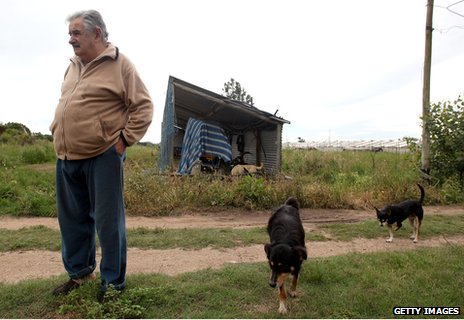
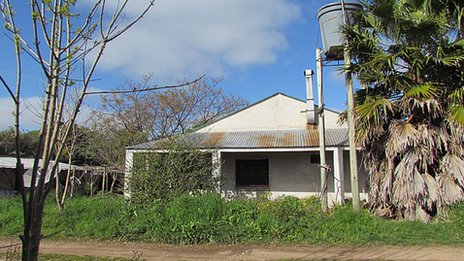
Jos Mujica, the Uruguayan president, at his house in Montevideo. Photograph: Mario Goldman/AFP/Getty Images
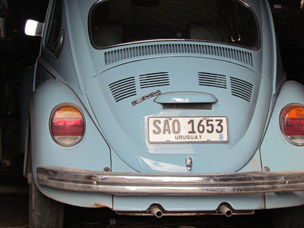
If anyone could claim to be leading by example in an age of austerity, it is Jos Mujica, Uruguay's president, who has forsworn a state palace in favour of a farmhouse, donates the vast bulk of his salary to social projects, flies economy class and drives an old Volkswagen Beetle.
But the former guerrilla fighter is clearly disgruntled by those who tag him "the world's poorest president" and much as he would like others to adopt a more sober lifestyle the 78-year-old has been in politics long enough to recognise the folly of claiming to be a model for anyone.
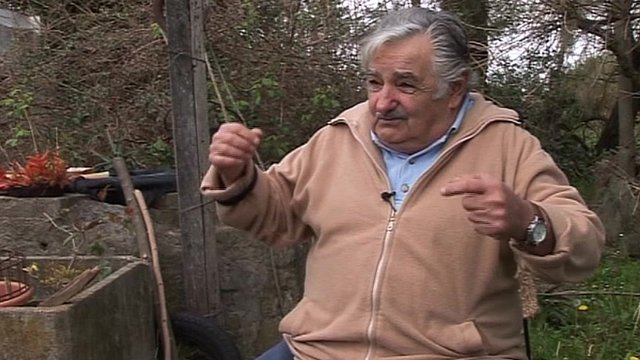
"If I asked people to live as I live, they would kill me," Mujica said during an interview in his small but cosy one-bedroom home set amid chrysanthemum fields outside Montevideo.
The president is a former member of the Tupamaros guerrilla group, which was notorious in the early 1970s for bank robberies, kidnappings and distributing stolen food and money among the poor. He was shot by police six times and spent 14 years in a military prison, much of it in dungeon-like conditions.
Since becoming leader of Uruguay in 2010, however, he has won plaudits worldwide for living within his means, decrying excessive consumption and pushing ahead with policies on same-sex marriage, abortion and cannabis legalisation that have reaffirmed Uruguay as the most socially liberal country in Latin America.
Praise has rolled in from all sides of the political spectrum. Mujica may be the only leftwing leader on the planet to win the favour of the Daily Mail, which lauded him as a trustworthy and charismatic figurehead in an article headlined: "Finally, A politician who DOESN'T fiddle his expenses."
But the man who is best known as Pepe says those who consider him poor fail to understand the meaning of wealth. "I'm not the poorest president. The poorest is the one who needs a lot to live," he said. "My lifestyle is a consequence of my wounds. I'm the son of my history. There have been years when I would have been happy just to have a mattress."
He shares the home with his wife, Luca Topolansky, a leading member of Congress who has also served as acting president.
As I near the home of Uruguay's first couple, the only security detail is two guards parked on the approach road, and Mujica's three-legged dog, Manuela.
Mujica cuts an impressively unpolished figure. Wearing lived-in clothes and well-used footwear, the bushy-browed farmer who strolls out from the porch resembles an elderly Bilbo Baggins emerging from his Hobbit hole to scold an intrusive neighbour.
In conversation, he exudes a mix of warmth and cantankerousness, idealism about humanity's potential and a weariness with the modern world at least outside the eminently sensible shire in which he lives.
He is proud of his homeland one of the safest and least corrupt in the region and describes Uruguay as "an island of refugees in a world of crazy people".
The country is proud of its social traditions. The government sets prices for essential commodities such as milk and provides free computers and education for every child.
Key energy and telecommunications industries are nationalised. Under Mujica's predecessor, Uruguay led the world in moves to restrict tobacco consumption. Earlier this week, it passed the world's most sweeping marijuana regulation law, which will give the state a major role in the legal production, distribution and sale of the drug.
Such actions have won praise and along with progressive policies on abortion and gay marriage strengthened Uruguay's reputation as a liberal country. But Mujica is almost as reluctant to accept this tag as he is to agree with the "poorest president" label.
"My country is not particularly open. These measures are logical," he said. "With marijuana, this is not about being more liberal. We want to take users away from clandestine dealers. But we will also restrict their right to smoke if they exceed sensible amounts of consumption. It is like alcohol. If you drink a bottle of whisky a day, then you should be treated as a sick person."
Uruguay's options to improve society are limited, he believes, by the power of global capital.
"I'm just sick of the way things are. We're in an age in which we can't live without accepting the logic of the market," he said.
"Contemporary politics is all about short-term pragmatism. We have abandoned religion and philosophy What we have left is the automatisation of doing what the market tells us."
The president lives within his means and promotes the use of renewable energy and recycling in his government's policies. At the United Nations' Rio+20 conference on sustainable development last year, he railed against the "blind obsession" to achieve growth through greater consumption. But, with Uruguay's economy ticking along at a growth rate of more than 3%, Mujica somewhat grudgingly, it seems accepts he must deliver material expansion. "I'm president. I'm fighting for more work and more investment because people ask for more and more," he said. "I am trying to expand consumption but to diminish unnecessary consumption I'm opposed to waste of energy, or resources, or time. We need to build things that last. That's an ideal, but it may not be realistic because we live in an age of accumulation."
Asked for a solution to this contradiction, the president admits he doesn't have the answers, but the former Marxist said the search for a solution must be political. "We can almost recycle everything now. If we lived within our means by being prudent the 7 billion people in the world could have everything they needed. Global politics should be moving in that direction," he said. "But we think as people and countries, not as a species."
Mujica and his wife chat fondly about meetings with Che Guevara, and the president guesses he is probably the last leader in power to have met Mao Zedong, but he has mixed feelings about the recent revolts and protests in Brazil, Turkey, Egypt and elsewhere. "The world will always need revolution. That doesn't mean shooting and violence. A revolution is when you change your thinking. Confucianism and Christianity were both revolutionary," he said.
But he is cynical about demonstrations organised by social networks that quickly dissolve before they have a capacity to build anything lasting. "The protesters will probably finish up working for multinationals and dying of modern diseases. I hope that I am wrong about that."
Life history
Shot, arrested, jailed and elected
1969 Active in the Tupamaros revolutionary group, which earned a reputation as the "Robin Hood guerrillas" by robbing delivery trucks and banks and distributing the food and money among the poor.
1970 Arrested for the first of four times. Mujica escapes Punta Carretas prison in a daring jailbreak. Shot and wounded numerous times in conflicts with security forces.
1972 Imprisoned again. Remains in jail for more than a decade, including two years' solitary confinement at the bottom of a well, where he speaks to frogs and insects to maintain his sanity.
1985 Constitutional democracy is restored in Uruguay and Mujica is released under an amnesty law.
1994 Elected deputy and arrives at the parliament building on a Vespa scooter. A surprised parking attendant asks: "Are you going to be here long?" Mujica replies: "I certainly hope so."
2009 Wins presidential election. Only words to the media that day: "Despite all this lip service, the world is not going to change." Adopts a ruling style closer to centre-left administrations of Lula in Brazil and Bachelet in Chile, rather than harder-left leaders such as Hugo Chvez.
2012 Lauded for a speech at the UN's Rio+20 global sustainability conference in which he calls for a fight against the hyper-consumption that is destroying the environment. "The cause is the model of civilization that we have created. And the thing we have to re-examine is our way of life."
2012 Announces that the presidential palace would be included among the state shelters for the homeless. Meanwhile, Mujica continues to live in his small farmhouse outside Montevideo.
2013 Mujica's government pushes the world's most progressive cannabis legalisation bill through Congress. "This is not about being free and open. It's a logical step. We want to take users away from clandestine business," he says.
http://www.theguardian.com/world/2013/dec/13/uruguay-president-jose-mujica
Jonathan Watts in Montevideo The Guardian, Friday 13 December 2013 13.37 GMT
Jos Mujica, the Uruguayan president, at his house in Montevideo. Photograph: Mario Goldman/AFP/Getty Images
If anyone could claim to be leading by example in an age of austerity, it is Jos Mujica, Uruguay's president, who has forsworn a state palace in favour of a farmhouse, donates the vast bulk of his salary to social projects, flies economy class and drives an old Volkswagen Beetle.
But the former guerrilla fighter is clearly disgruntled by those who tag him "the world's poorest president" and much as he would like others to adopt a more sober lifestyle the 78-year-old has been in politics long enough to recognise the folly of claiming to be a model for anyone.
"If I asked people to live as I live, they would kill me," Mujica said during an interview in his small but cosy one-bedroom home set amid chrysanthemum fields outside Montevideo.
The president is a former member of the Tupamaros guerrilla group, which was notorious in the early 1970s for bank robberies, kidnappings and distributing stolen food and money among the poor. He was shot by police six times and spent 14 years in a military prison, much of it in dungeon-like conditions.
Since becoming leader of Uruguay in 2010, however, he has won plaudits worldwide for living within his means, decrying excessive consumption and pushing ahead with policies on same-sex marriage, abortion and cannabis legalisation that have reaffirmed Uruguay as the most socially liberal country in Latin America.
Praise has rolled in from all sides of the political spectrum. Mujica may be the only leftwing leader on the planet to win the favour of the Daily Mail, which lauded him as a trustworthy and charismatic figurehead in an article headlined: "Finally, A politician who DOESN'T fiddle his expenses."
But the man who is best known as Pepe says those who consider him poor fail to understand the meaning of wealth. "I'm not the poorest president. The poorest is the one who needs a lot to live," he said. "My lifestyle is a consequence of my wounds. I'm the son of my history. There have been years when I would have been happy just to have a mattress."
He shares the home with his wife, Luca Topolansky, a leading member of Congress who has also served as acting president.
As I near the home of Uruguay's first couple, the only security detail is two guards parked on the approach road, and Mujica's three-legged dog, Manuela.
Mujica cuts an impressively unpolished figure. Wearing lived-in clothes and well-used footwear, the bushy-browed farmer who strolls out from the porch resembles an elderly Bilbo Baggins emerging from his Hobbit hole to scold an intrusive neighbour.
In conversation, he exudes a mix of warmth and cantankerousness, idealism about humanity's potential and a weariness with the modern world at least outside the eminently sensible shire in which he lives.
He is proud of his homeland one of the safest and least corrupt in the region and describes Uruguay as "an island of refugees in a world of crazy people".
The country is proud of its social traditions. The government sets prices for essential commodities such as milk and provides free computers and education for every child.
Key energy and telecommunications industries are nationalised. Under Mujica's predecessor, Uruguay led the world in moves to restrict tobacco consumption. Earlier this week, it passed the world's most sweeping marijuana regulation law, which will give the state a major role in the legal production, distribution and sale of the drug.
Such actions have won praise and along with progressive policies on abortion and gay marriage strengthened Uruguay's reputation as a liberal country. But Mujica is almost as reluctant to accept this tag as he is to agree with the "poorest president" label.
"My country is not particularly open. These measures are logical," he said. "With marijuana, this is not about being more liberal. We want to take users away from clandestine dealers. But we will also restrict their right to smoke if they exceed sensible amounts of consumption. It is like alcohol. If you drink a bottle of whisky a day, then you should be treated as a sick person."
Uruguay's options to improve society are limited, he believes, by the power of global capital.
"I'm just sick of the way things are. We're in an age in which we can't live without accepting the logic of the market," he said.
"Contemporary politics is all about short-term pragmatism. We have abandoned religion and philosophy What we have left is the automatisation of doing what the market tells us."
The president lives within his means and promotes the use of renewable energy and recycling in his government's policies. At the United Nations' Rio+20 conference on sustainable development last year, he railed against the "blind obsession" to achieve growth through greater consumption. But, with Uruguay's economy ticking along at a growth rate of more than 3%, Mujica somewhat grudgingly, it seems accepts he must deliver material expansion. "I'm president. I'm fighting for more work and more investment because people ask for more and more," he said. "I am trying to expand consumption but to diminish unnecessary consumption I'm opposed to waste of energy, or resources, or time. We need to build things that last. That's an ideal, but it may not be realistic because we live in an age of accumulation."
Asked for a solution to this contradiction, the president admits he doesn't have the answers, but the former Marxist said the search for a solution must be political. "We can almost recycle everything now. If we lived within our means by being prudent the 7 billion people in the world could have everything they needed. Global politics should be moving in that direction," he said. "But we think as people and countries, not as a species."
Mujica and his wife chat fondly about meetings with Che Guevara, and the president guesses he is probably the last leader in power to have met Mao Zedong, but he has mixed feelings about the recent revolts and protests in Brazil, Turkey, Egypt and elsewhere. "The world will always need revolution. That doesn't mean shooting and violence. A revolution is when you change your thinking. Confucianism and Christianity were both revolutionary," he said.
But he is cynical about demonstrations organised by social networks that quickly dissolve before they have a capacity to build anything lasting. "The protesters will probably finish up working for multinationals and dying of modern diseases. I hope that I am wrong about that."
Life history
Shot, arrested, jailed and elected
1969 Active in the Tupamaros revolutionary group, which earned a reputation as the "Robin Hood guerrillas" by robbing delivery trucks and banks and distributing the food and money among the poor.
1970 Arrested for the first of four times. Mujica escapes Punta Carretas prison in a daring jailbreak. Shot and wounded numerous times in conflicts with security forces.
1972 Imprisoned again. Remains in jail for more than a decade, including two years' solitary confinement at the bottom of a well, where he speaks to frogs and insects to maintain his sanity.
1985 Constitutional democracy is restored in Uruguay and Mujica is released under an amnesty law.
1994 Elected deputy and arrives at the parliament building on a Vespa scooter. A surprised parking attendant asks: "Are you going to be here long?" Mujica replies: "I certainly hope so."
2009 Wins presidential election. Only words to the media that day: "Despite all this lip service, the world is not going to change." Adopts a ruling style closer to centre-left administrations of Lula in Brazil and Bachelet in Chile, rather than harder-left leaders such as Hugo Chvez.
2012 Lauded for a speech at the UN's Rio+20 global sustainability conference in which he calls for a fight against the hyper-consumption that is destroying the environment. "The cause is the model of civilization that we have created. And the thing we have to re-examine is our way of life."
2012 Announces that the presidential palace would be included among the state shelters for the homeless. Meanwhile, Mujica continues to live in his small farmhouse outside Montevideo.
2013 Mujica's government pushes the world's most progressive cannabis legalisation bill through Congress. "This is not about being free and open. It's a logical step. We want to take users away from clandestine business," he says.
http://www.theguardian.com/world/2013/dec/13/uruguay-president-jose-mujica